Hidden Infrastructure in History: 5 Systems That Secretly Controlled Civilizations

In 1978, archaeologist Shereen Ratnagar catalogued something in the ruins of Mohenjo-daro that stopped her team cold: every fired brick across a civilization spanning 1.25 million square kilometers shared a dimensional ratio of 1:2:4. Not approximately. Exactly. That detail sat in her field notes for years before its full implication landed: whoever built these cities 4,600 years ago had imposed a single manufacturing standard across a territory larger than modern Pakistan — with no written law anyone has yet found, no known central authority, and no evidence of military enforcement of building codes.
I want to be careful here. "Control" is a word historians should use grudgingly, and I'll return to its limits. But the basic observation holds: when the bricks themselves encode the standard, every builder who uses one is participating in the state's logic whether they intend to or not. That's a different kind of power than a soldier at a checkpoint.
What follows draws on UC Berkeley mineralogical studies of Roman maritime concrete (Jackson et al., American Mineralogist, 2017), surviving Newport estate blueprints held by the Preservation Society of Newport County, Ratnagar's Harappan field surveys, and cuneiform administrative records from the Oriental Institute in Chicago. Five systems emerge from this material — five moments when engineers produced compliance that no army could have sustained at equivalent scale. In each case, the mechanism was the same: make the control invisible by making it physical.
What Is Hidden Infrastructure in History?
Hidden infrastructure refers to the deliberate engineering of physical and bureaucratic systems to govern populations without relying on visible force. Early empires recognized that stationing a soldier on every street corner was expensive, unstable, and conspicuous. Implementing a standardized road width, a universal weight system, or an acoustic floor plan achieved the same compliance at a fraction of the cost — and, crucially, left no obvious target for resentment.
Infrastructure is never politically neutral. The shape of a road, a tunnel, or a measurement unit changes who gets seen, who gets taxed, and who controls the flow of resources. Political theorist James C. Scott describes this as "legibility" — the process by which states reorganize nature and society to make populations easier to monitor and extract from. His 1998 study Seeing Like a State (Yale University Press, Chapter 2) documented how grid cities, standardized surnames, and cadastral mapping all served the same administrative function as surveillance, without looking anything like it.
Scott's framework is compelling, though it tends to flatten the messiness of historical evidence into cleaner arguments than the archaeology always supports. The Harappan case in particular remains genuinely puzzling: we don't know what institution produced that brick standardization, and the absence of palaces or obvious administrative centres at many Indus Valley sites makes confident claims about "state control" harder than they first appear. The physical uniformity is real. What produced it is still contested.
"The most powerful constraint is one whose walls the constrained cannot identify."
Historical Background: The Shift to Covert Control
Early settlements operated on raw, visible power. A chieftain ruled because he commanded the most warriors. But scaling that model across empires of millions proved practically impossible: armies are expensive to maintain, soldiers defect, and populations under direct coercion find ways to organize around it.
The turning point appears in the archaeological record around 3000 BCE, when something changes in the built environment across Mesopotamia, the Indus Valley, and the Nile Delta. Historian Ian Morris, in his comparative study Why the West Rules — For Now (Farrar, Straus and Giroux, 2010, Chapter 4), identifies this era as the moment when social energy shifted from war-making to infrastructure-making. Road networks — as explored in our analysis of what ancient roads reveal about early civilization — funnelled trade, troops, and tax revenue directly into state hands. Whether those effects were intended or emergent from engineering decisions made for purely practical reasons is, genuinely, an open question that Morris himself doesn't fully resolve.
The 5 Core Infrastructure Systems
What I find genuinely remarkable — and what the primary sources keep reinforcing — is how consistently these mechanisms cluster around the same underlying logic: reduce the visibility of the control mechanism until the controlled population internalizes it as nature rather than policy. Five distinct systems express this logic across cultures separated by thousands of years and kilometres.
Control the strongest building material and you control trade geography. Rome monopolized Mediterranean commerce by engineering harbour concrete no rival could replicate.
By routing the labour required to run a household or estate entirely underground, ruling classes manufactured a perception of effortless, god-given wealth.
Forcing merchants to abandon local weights and adopt state units was the earliest form of economic tracking — every transaction now legible to a distant bureaucracy.
Spaces were engineered so the working class remained acoustically and visually absent from the social world of those they served. The gap was built, not assumed.
A straight, predictable city can be taxed, policed, and mobilized far more efficiently than an organic winding settlement. The grid is a tax instrument as much as a planning tool.
How Hidden Infrastructure Controlled Civilizations
1. Movement Control
Roman roads were built to a standardized carriageway width of approximately 4.1 metres — wide enough for two military carts to pass simultaneously in opposite directions. More critically, every road in the network fed back toward Rome. A merchant moving grain from Hispania to Gaul had no viable alternative route; the infrastructure made economic independence of movement functionally impossible while making military rapid-response a near-certainty for anyone challenging the state.
The Roman road network at its peak covered approximately 400,000 kilometres, with roughly 80,500 kilometres surfaced in stone. Lionel Casson, in Travel in the Ancient World (Johns Hopkins University Press, 1994, Chapter 3), estimated that Roman military units could sustain 30–40 kilometres per day on paved roads — roughly three times the speed achievable off-road. That speed differential was a political instrument. It is also, I should note, a figure that historians have debated: some accounts of forced marches suggest significantly faster movement, which would make the advantage even more pronounced.
2. Economic Control
The Mesopotamian shekel was not simply a currency — it was a bureaucratic instrument. Clay tablet records confirm a standardized silver weight of 8.33 grams per shekel, consistently applied across transactions in the Ur III period (c. 2112–2004 BCE). Cuneiform administrative tablets from the Ur III corpus at the Oriental Institute, which runs to over 30,000 records from sites like Drehem and Puzrish-Dagan, document grain, wool, and silver transactions recorded centrally at a scale that implies something approaching price surveillance. I say "something approaching" deliberately — whether this represents active monitoring or simply consistent record-keeping practices is a distinction the tablets themselves don't resolve. Non-compliant local weights, under this system, became evidence of tax evasion. See our article on how ancient measurement systems built authority for a fuller treatment.
3. Visibility Control
The psychological sophistication of the Gilded Age tunnel systems is easy to underestimate. Newport estate blueprints on file at the Preservation Society of Newport County show service routes pre-planned before above-ground construction began. At The Breakers, the Vanderbilt mansion completed in 1895, coal deliveries, kitchen supplies, and laundry moved through basement-level corridors separated from the principal floors by acoustic buffer rooms. Forty-four of the mansion's approximately 70 staff were never expected to appear in the social rooms. The architecture budgeted for their invisibility the way it budgeted for window glass.
When wealth appears to materialize without visible human effort, it begins to seem naturally occurring rather than socially constructed — which is exactly the impression the architecture was designed to create. Whether the Vanderbilts consciously engineered this perception or simply replicated European aristocratic precedent they had absorbed is genuinely unclear. The effect was the same either way.
Want to see the actual blueprints of these hidden labour networks? 👉 Explore the 7 Secret Gilded Age Hidden Tunnels of America's Elite
Examples of Hidden Infrastructure in History
How Did Roman Concrete Work?
In 2017, a team led by Marie Jackson at UC Berkeley published mineralogical analysis of Roman maritime concrete sampled from harbour structures at Caesarea Maritima and Baiae. The findings, published in American Mineralogist (Vol. 102, doi: 10.2138/am-2017-5993CCBY), identified tobermorite crystals growing inside the ancient material — a mineral phase that modern Portland cement cannot produce under ambient conditions and that actively reinforces the matrix against fracture over time.
The key ingredient was pozzolanic ash from the volcanic fields around Pozzuoli, near Naples. When mixed with seawater, the ash underwent a slow aluminous tobermorite crystallization reaction that took decades to complete — meaning the concrete grew structurally denser for roughly 500 years after it was poured. Roman engineers working from Vitruvius's specifications in De Architectura did not know the chemistry involved; they knew only that harbours built this way did not need replacement within a human lifetime, let alone a political one. The economic and strategic implication was significant: Rome controlled every deep-water harbour in the Mediterranean for which this formula was used, and no competing naval power could build infrastructure that outlasted the political cycles required to challenge it. Our detailed breakdown of Roman concrete durability walks through the full mineralogy.
What Were Gilded Age Tunnels Used For?
In the late 19th century, the operational scale of America's largest private estates created a specific logistical problem: a mansion like Biltmore in Asheville required over 80 full-time staff to function, but the aesthetic project of Gilded Age wealth depended on those staff being invisible. Frederick Law Olmsted's original landscape plans for Biltmore, archived at the Library of Congress, include explicit service-road routing designed to keep delivery wagons out of sightlines from the house's principal facades.
At Newport's Marble House, finished in 1892, surviving construction blueprints show a below-grade service level with separate entrance, separate stairwells, and a dumbwaiter system for food service — all designed to ensure that the Vanderbilts' guests would never see the mechanical process behind a dinner course appearing at the table. These were not afterthoughts; they were specified in the original architectural program by Richard Morris Hunt. The extent to which Hunt himself understood the social-perception function — as opposed to the purely practical function — of this separation is something I've found no direct documentation for.
Explore the full underground tunnel system here →Harappan Urban Grid: Control Through Geometry
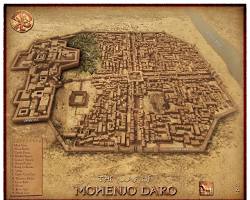
Shereen Ratnagar's field surveys at Mohenjo-daro, published in Understanding Harappa (Tulika Books, 2001, Chapters 3–5), documented standardized brick ratios of 1:2:4 applied consistently across sites separated by over 1,000 kilometres, spanning a 700-year occupation. Fired bricks in Harappa, Dholavira, and Mohenjo-daro share not just the ratio but measurements within a few millimetres of each other — a precision that strongly implies shared templates, shared training of craftsmen, or both.
What produced this consistency is the genuinely interesting puzzle. The orthogonal streets, standardized block sizes, and elevated citadels oriented identically across sites all imply some form of centralized planning authority. But — and this is where I think popular accounts of Harappan "control" outrun the evidence — Ratnagar herself is careful to note the absence of large administrative buildings, weapon caches, or evidence of social hierarchy comparable to contemporaneous Mesopotamia. Whatever institution produced that brick standardization, it does not obviously resemble a coercive state in the archaeological record. As we explore in our article on Indus Valley urban planning, the grid made these cities highly governable — whether or not they were governed in the way we assume.
What the Physical Record Actually Shows
The dominant narrative of technological progress assumes a reliable upward trajectory — that what we build today is, in most material respects, better than what came before. The physical record of Roman maritime concrete makes that assumption difficult to sustain.
Modern reinforced concrete, the global construction standard since the early 20th century, begins oxidizing its steel reinforcement within 50 to 100 years of installation, depending on chloride exposure. The Roman harbour structures at Caesarea Maritima have been fully immersed in seawater for approximately 2,000 years, and Jackson et al.'s mineralogical analysis found them structurally sound — with the tobermorite crystallization process still ongoing.
We did not improve on Roman marine concrete. We replaced it with a cheaper, faster solution that is structurally inferior over any timescale longer than a human lifetime. The economic incentive to use cheaper materials won out over the engineering case for better ones. I find this genuinely deflating, and I don't think it's a minor point: it means some of what we classify as "progress" is actually a trade of long-term durability for short-term cost efficiency. Whether that trade was conscious or simply emergent from market incentives is worth sitting with. As explored in our investigation of lost civilizations more technically advanced than their successors, history doesn't always move in the direction we assume.
Why It Matters Today
The underlying logic of these five systems has not changed. The architecture of population management is no longer built from volcanic limestone and iron rails. It is built from fibre optic infrastructure, server farm architecture, and behavioural prediction systems running on transaction data. Every purchase logged in a retail database is the functional descendant of a clay tablet recording a shekel weight at a Mesopotamian grain market.
The Roman road forced physical movement through state-legible corridors. Digital payment infrastructure does the same thing to financial movement — the transaction exists only when it passes through a node the state can read. These are not metaphorical parallels; they are the same administrative logic operating through different physical media. The origin of that impulse is traced in our investigation of hidden networks that existed long before the internet.
Understanding hidden infrastructure in history is not an academic exercise. It is a method for reading the present — for identifying which systems that feel natural and inevitable were, in fact, designed by someone with a specific interest in making them feel that way.
Frequently Asked Questions
Conclusion: The Logic of the Dead
Every road we travel was laid by an engineer who understood that controlling the path is more durable than controlling the traveller. Every service entrance separated from a front door encodes a theory of social hierarchy in brick and mortar that has now outlasted the people who commissioned it by over a century.
The Harappan brick ratio survived 4,600 years. The Roman harbour at Caesarea is structurally sound after two millennia underwater. The Newport estate blueprints are still in a Newport archive, still showing exactly where the coal was supposed to go. These systems were built to last — because systems that outlast their designers are systems that no longer need defending.
Recognizing hidden infrastructure in history is not a cynical exercise. It is the first step toward an accurate account of how social arrangements actually get produced and maintained — and why they feel, to the people inside them, like the natural order of things.