

Archive No. 442 Dark History
14 Min Investigation
Beneath America’s Richest Mansions Were
Hidden Tunnel Cities No One Was
Meant to See
Beneath the Tiffany chandeliers and imported marble ran a parallel infrastructure, iron rail systems, ice vaults, pneumatic tubes, and an invisible army. It was engineered to disappear. Most of it did.
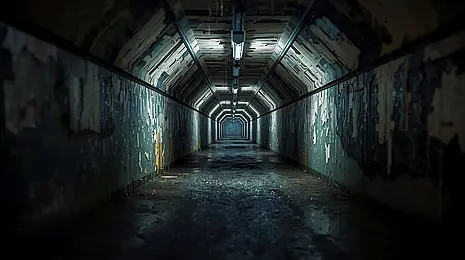
System Overview: A surviving service corridor beneath a Newport estate. The brick acoustic vaulting, not structural necessity, was designed to absorb the sound of iron cart wheels from the guest floors above. Source: Newport Historical Society.
Most people think the Gilded Age elite only built mansions. They built two cities in every building, one for display above ground and one for labour below it. The subterranean layer was a precision-engineered logistics network: inclined iron rails, acoustic dampening, ice refrigeration, pneumatic messaging, and hidden ventilation. It was designed with a single purpose: to make an entire maintenance workforce completely invisible to anyone upstairs.
The Architecture of Invisibility
The term hidden tunnel is technically accurate but wildly insufficient for what was actually built. The Gilded Age hidden tunnels were systematic, purpose-designed underground infrastructure networks engineered between 1870 and 1910, and they were among the most sophisticated domestic engineering projects in American history.
At an estate like The Breakers in Newport, a complete parallel architectural world existed beneath the ballrooms. The design requirement was precise: a housemaid had to be able to move from her third-floor sleeping quarters down to the basement kitchen and then out to the dining room service entrance without ever entering a space a guest might occupy. Not occasionally. Every time, without exception, every day.
This parallel world was not built for the comfort of those who used it. While the ballrooms above featured twenty-foot ceilings and French limestone, many of the brick service tunnels below were deliberately claustrophobic. Adult workers carried hundred-pound loads while permanently stooped. The architecture was a physical expression of the class divide: soaring space above for the owners, compressed functionality below for the labour. The geometry of the building itself enforced the social hierarchy.
This was not primarily about efficiency of movement, it was about system masking. For the anxious new money of the Gilded Age, true luxury meant presenting a life untouched by human labour. The chandeliers had to seem self-lighting, the tables self-setting, the fires self-kindling. Magic requires hiding the hands of the magician. The tunnel network was the mechanism behind that illusion.
The Hidden Workforce That Ran the Mansion
Behind the masking of effortless luxury was a workforce that often outnumbered the family itself by a ratio the hosts would never have acknowledged publicly.

At massive estates like the Biltmore Estate in North Carolina, resident staff during the peak season could easily exceed forty people. This subterranean army included cooks, scullery maids, footmen, laundresses, mechanical engineers, boiler operators, and stable workers. They lived and breathed in the spaces between the walls and beneath the floors. Many slept in dormitory rooms built into the attic or deep basement levels, with their entire working lives confined to routes the family would never see.
Their daily routines were mapped entirely around invisibility. Work began before dawn in damp, echoing corridors. The public rooms had to be meticulously cleaned and fires lit hours before the first guest stirred. Meals were prepared in industrial-scale basement kitchens and routed upward through hidden dumbwaiter systems. Even the timing of deliveries, coal, ice, food, was scheduled for the hours when guests were reliably asleep or out.
Even basic movement through the house was strictly controlled. Servants were required to memorise silent routes: which service stairs bypassed the grand landings, which flush-mounted jib doors allowed them to disappear through the walls unnoticed. This was not informal custom, it was codified in domestic service contracts and enforced with the threat of instant dismissal.
The Mechanics of Silence
The operational engineering of these tunnels was directed almost entirely at sensory management. If a guest heard the rumble of a cart, the illusion was broken. Every engineering decision in the below-ground layer was made in service of acoustic, visual, and olfactory concealment from the floors above.

The Vanderbilt coal delivery system at The Breakers is the most thoroughly documented example of this acoustic engineering. The inclined rail running from the exterior delivery yard down into the basement boiler room was set at precisely 15 degrees, engineered so that gravity assisted the coal carts rather than requiring the workers to push, which reduced both physical effort and wheel-against-rail friction noise. The iron rails were regularly wiped with tallow grease to prevent any metallic squeal.
The floor structure itself was engineered for concealment. Engineers packed earth backfill between the brick vaulting of the service corridor and the wooden floor joists of the guest level above, providing approximately twenty decibels of acoustic dampening. Pneumatic tube systems, running through the walls, allowed silent communication between the basement control point and the upper floors, replacing the traditional bell-pull systems that produced audible rings in both directions.
Descriptions of the below-ground environment from surviving domestic service records note the air as having a “distinct, heavy chemical character”, a persistent mixture of anthracite coal dust and damp salt air drawn in from the Atlantic coastline. Workers described it as the defining sensory signature of the hidden world, in stark contrast to the perfumed drawing rooms directly above.
Ice, Air, and the Climate Systems Nobody Talks About
Historians documenting the Gilded Age service infrastructure tend to focus on the coal rails and the kitchen logistics. The least discussed element of these underground systems is temperature control, and it represents some of the most sophisticated passive engineering of the era.
Decades before mechanical refrigeration, Gilded Age estates relied on massive underground ice storage rooms. These subterranean vaults were packed with river ice harvested during winter and heavily insulated with feet of packed sawdust. A large Newport estate might take delivery of thirty or forty tons of ice in a single winter shipment, stored in chambers built directly into the bedrock beneath the service wings. The logistical challenge of getting ice from these chambers to guest floors silently, without visible staff, without dripping meltwater in carpeted corridors, required its own engineering sub-system: lead-lined drainage channels built into the masonry, dedicated ice dumbwaiters, and a precise restocking schedule timed to guest meal patterns.
Airflow was equally engineered. Massive brick ventilation shafts built into the hidden structural core of the building carried heat and smoke from the basement boilers away from the occupied floors, venting through disguised chimneys integrated into the roofline. Simultaneously, this chimney effect drew cool air from the deep basements upward through the building, keeping guest rooms at a controlled temperature during the humid August summers of Newport and the Carolinas, a form of passive stack ventilation that anticipated principles later formalised in modern building physics.
The delivery and distribution of ice through the hidden service network was one of the most operationally complex aspects of running a Gilded Age estate. The timing had to align with meal service schedules, the meltwater had to be invisibly drained, and the ice itself had to travel from deep basement storage to upper-floor wine coolers and sickroom provisions without ever appearing in a guest corridor. The lead-lined hidden drainage channels documented at several surviving Newport estates are physical evidence of how seriously this problem was engineered.
The Rules of Invisibility
The architecture created the physical infrastructure of concealment, but strict institutional rules enforced it. Workers were contractually and legally bound to systems of scheduled invisibility that had no analogue anywhere else in American working life.
If a servant was found walking through a guest corridor during entertaining hours, dismissal was immediate and without appeal. There were no second chances in domestic service at this level. The employment market for trained house staff was competitive enough that estate managers could maintain these standards without negotiation. The physical tunnels and the contractual rules were two parts of a single system.
Communication had to change alongside movement. Traditional servant bells were considered too noisy, the ringing was audible in adjacent guest rooms and broke the atmosphere of effortless luxury. By the 1880s, advanced estates had replaced bell systems with Annunciator Boards: mahogany panels mounted in the basement that silently dropped a flag indicator or flashed a low-voltage electrical light to identify exactly which room required service. The boards allowed an entire domestic operation to mobilise without producing a single audible signal. Workers could read the board, dispatch the appropriate person, and have the request fulfilled before the guest registering the absence had finished the thought that prompted it.
“The test of a perfectly run estate was not that things happened smoothly. It was that no one on the guest side could see any evidence that things happened at all.”
Newport domestic service manual, c. 1895, preserved in the Newport Historical Society archiveWhy Most People Don’t Know This Today
If these systems were so massively engineered, why are they largely absent from public historical memory? The most direct answer is that most of the buildings were annihilated, and when the buildings went, everything beneath them went with them.
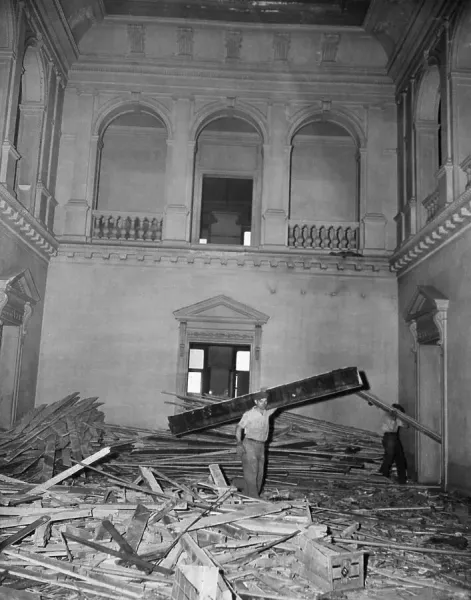
Fifth Avenue’s legendary stretch of Gilded Age family compounds was progressively demolished from the 1920s through the 1940s as Manhattan real estate values made the land worth exponentially more than the structures on it. Skyscrapers replaced chateaus. Contractors filling basements with rubble before new foundations were poured weren’t archiving the systems they destroyed, they were on a demolition schedule. The subterranean infrastructure of an era disappeared in the same years that the era’s last survivors were still alive to remember it.
The gap in the historical record is not entirely accidental. It mirrors the logic that built the tunnels in the first place. The operational world of domestic labour was never meant to be seen or documented. The estate owners who commissioned the architecture had no interest in creating records of it. The workers who used it were not in a position to preserve it. And the demolition contractors who destroyed it had no reason to care. Gilded Age hidden tunnel infrastructure is underrepresented in the historical record because every social and economic incentive pointed in that direction.
Myth vs. Reality: What the Physical Evidence Shows
Common Assumptions vs. The Archival Record
| Common Assumption | What the Evidence Shows |
|---|---|
| Built for guest convenience | Built strictly for servant invisibility. Guest convenience was a byproduct of social segregation, not its purpose. The systems were optimised to route workers away from guests, not to reduce guest walking distances. |
| Simple dirt-floored passages | Highly engineered logistics systems featuring inclined iron rails, pneumatic messaging, lead-lined drainage channels, acoustic dampening, tallow-greased wheel tracks, and purpose-built ventilation. Newport Historical Society blueprints show civil engineering of equivalent complexity to contemporary industrial facilities. |
| Servants moved freely below | Architecture and contract law enforced strict visibility rules simultaneously. Workers were confined to scheduled routes. Deviation during guest hours meant dismissal. Physical barriers (locked jib doors, gate systems) reinforced the contractual rules. |
| Prohibition escape routes | A persistent myth with no documentary basis. These systems were built decades before 1920 and designed entirely for domestic labour logistics. No architectural drawings or service records connect the tunnels to alcohol storage or escape from law enforcement. |
| Technology was primitive | The Annunciator Board electrical systems, pneumatic tube communications, and gravity-assisted coal rail engineering deployed in these estates were contemporary with the most advanced industrial facilities of the period. Domestic infrastructure was cutting-edge technology applied to concealment. |
The Modern Legacy: Hidden Infrastructure Didn’t End in 1910
What makes Gilded Age hidden tunnel systems historically significant beyond their own era is that they didn’t disappear, they scaled. The architectural philosophy of the double city, a visible world for guests and an invisible world for operations, became the design template for every large public environment built in the 20th century.
Modern luxury hotels operate on the same principle. Their service corridors route housekeeping, laundry, and food delivery away from guest sight lines. The labour that maintains the illusion of effortless hospitality is carefully routed through a parallel physical infrastructure built into the same walls. Major international airports maintain entire sub-terminal service networks invisible to passengers. And Disney’s Magic Kingdom operates a complete underground utility corridor system, the utilidors, beneath the park, routing operational logistics so that cast members, deliveries, and waste removal never break the guest experience above. Disney has never publicly described this as the Gilded Age model, but the engineering logic is identical.
The Gilded Age built the legacy framework for how modern society hides operational complexity behind a surface of seamlessness. Every time you check in to a hotel and never see the laundry, or walk through an airport without seeing how it actually works, or visit a theme park that appears to run on magic, you are experiencing architecture designed on the same principle as the Newport service tunnels. The hidden city is still there. It just changed employers.
These Tunnels Were Built to Disappear
In a way, they succeeded brilliantly. Not because the brick walls crumbled or the iron rails rusted, many of the surviving structures are in better physical condition than the guest rooms above them. They disappeared because the social conditions that built them, and the class interests that controlled the documentation of them, ensured that almost no one who could have recorded this infrastructure thought it was worth recording.
The Gilded Age hidden tunnel systems represent one of the largest bodies of domestic engineering in American history, built to the highest technical standards of their era, by a workforce that was legally prevented from leaving any record of working there, for owners who had every incentive to ensure the systems’ existence was never acknowledged. That combination, technical sophistication, deliberate erasure, and institutional silence, is exactly why these spaces remained hidden long after the mansions above them became museums.
The physics of the inclined coal rails didn’t change. The acoustic engineering of the brick vaulting still works. What changed was the institutional willingness to acknowledge that any of it existed. In that sense, the tunnels are still operating exactly as designed.
FAQ: Gilded Age Hidden Tunnels
QAre the Gilded Age hidden tunnels real?
Yes. Service corridors and below-ground logistics infrastructure are thoroughly confirmed by surviving architectural blueprints, Newport Historical Society technical logs, and intact physical structures. The Breakers in Newport and the Biltmore Estate both retain documented below-ground service infrastructure used continuously through the late 19th and early 20th centuries. The engineering complexity of surviving drawings makes the scale of these systems impossible to dispute.
QCan you visit the Gilded Age hidden tunnels today?
Partial access is available to the public. The Biltmore Estate currently offers specialised below-ground tours that take visitors through the operational basements and service corridors. The Preservation Society of Newport County occasionally opens access to areas of the underground passage at Marble House during special events. Most New York City tunnel infrastructure was permanently destroyed when Fifth Avenue mansions were demolished for commercial development in the 1920s and 1930s.
QHow many servants worked in a Gilded Age mansion?
The number varied by estate size, but the scale was substantial. A large summer cottage in Newport required 30 to 40 continuous resident staff during the season to maintain daily operations. Larger year-round operational estates like the Biltmore required upwards of 80 domestic staff members to run the house, kitchens, grounds, stables, and hidden infrastructure systems. The ratio of service staff to family members at peak season could exceed ten to one.
QWere Gilded Age tunnels built for Prohibition escape routes?
No. This is a widespread myth with no documentary basis. The service corridor and tunnel systems were engineered between 1870 and 1910, decades before Prohibition began in 1920, and were designed entirely for domestic labour logistics. Their purpose was to route workers away from guest sight lines, not to conceal alcohol. No architectural drawings, estate blueprints, or service records document any connection between the tunnel systems and Prohibition-era activities.
QWhat engineering technology was used in the tunnels?
The engineering was contemporary with the most advanced industrial facilities of the period. Documented technologies include: gravity-assisted inclined iron rail systems for coal delivery; pneumatic tube communication networks for silent inter-floor messaging; Annunciator Board electrical signalling systems; lead-lined drainage channels for ice meltwater; brick acoustic vaulting with earth backfill dampening; dedicated mechanical ventilation shafts; and purpose-built dumbwaiter systems with counterweighted mechanisms designed for silent operation. These were not crude passages, they were precision-engineered logistics infrastructure.
The Systems Built to Stay Invisible
Hidden infrastructure is a recurring theme across history. These investigations follow the same thread through different eras and civilisations.
Sources and Further Reading
Primary archives, preservation society records, and historical analyses underpinning the claims in this article.
- Preservation Society of Newport County. Architectural Survey Records: The Breakers, Marble House, Rosecliff. Newport, RI. Ongoing archival project. Primary source for service corridor blueprints and below-ground infrastructure documentation referenced throughout this article.
- Vanderbilt, Cornelius II. Original construction correspondence and contractor specifications for The Breakers, c. 1893–1895. Held at the Newport Historical Society. Primary source for the coal rail system and acoustic dampening specifications.
- Biltmore Estate. Historic Preservation Technical Reports: Basement and Service Infrastructure. Asheville, NC, 2018. Documents surviving below-ground service systems, dumbwaiter networks, and ice storage chambers at the Biltmore.
- Strasser, Susan. Never Done: A History of American Housework. Pantheon Books, 1982. Foundational analysis of domestic labour systems in American elite households, including documentation of service segregation rules and Annunciator Board technology.
- Homberger, Eric. Mrs Astor’s New York: Money and Social Power in a Gilded Age. Yale University Press, 2002. Contextual source for the social architecture of Gilded Age elite culture and the institutional imperatives driving service infrastructure design.
- Newport Historical Society. Technical Log Collection: Domestic Service Records, Newport Summer Estates, 1880–1915. Newport, RI. Archive of surviving service manuals, staff contracts, and operational records. Primary source for the Annunciator Board system and movement restriction protocols.
- Kowsky, Francis R. Country, Park, and City: The Architecture and Life of Calvert Vaux. Oxford University Press, 1998. Includes analysis of service infrastructure design philosophy in American elite domestic architecture, 1860–1900.



Extremely interesting. My profession for 55+ years has been that of an auctioneer traveling the country selling real estate at auction including many large homes. I never knew about the tunnels for domestic help in large mansions but it answers many questions about how they operated. We stay often at the upscale Greenbrier Resort in White Sulphur Springs, WV, their underground bunker is well known and I’m sure there must be tunnel systems there for the help.
Hi Jim, thank you so much for sharing your perspective! With 55+ years in the industry, I can only imagine the incredible architecture you’ve seen. You’re spot on about the Greenbrier—places of 그 stature almost always had ‘invisible’ circulation routes to keep the service separate from the guests. It’s fascinating how those hidden designs still answer questions for pros like you today!