Forensic Archive Historical Value
17 Min Historical Investigation
Why Some Historical Artifacts
Become Priceless
The Rosetta Stone cannot be bought at any price. A Leonardo da Vinci notebook sold for $30 million. A single 1856 postage stamp fetched $9.48 million. Understanding why requires looking past the age of an artifact to examine the auction records, conservation lab reports, legal statutes, and colonial shipping manifests that quietly dictate commercial worth.

The Rosetta Stone, Room 4, British Museum, London. A granodiorite stele inscribed in 196 BCE during the reign of Ptolemy V, discovered by French soldiers near Rashid, Egypt in 1799. Under the British Museum Act of 1963, it cannot be sold, lent permanently, or transferred out of the collection. It has been visited by roughly 2.5 million people annually since 2000, and it has never had a market price. Image: Public Domain.
The Rosetta Stone sits in Room 4 of the British Museum, visited by millions of people each year. It has never had a price. It cannot be auctioned, and it could not legally be sold under any offer. Yet artifacts of comparable historical significance, like a single notebook page in Leonardo da Vinci’s handwriting or a 170-year-old postage stamp from a colonial Caribbean territory, sell at auction for figures that strain comprehension. The answer involves auction catalogs, conservation lab reports, and legal statutes built over centuries, alongside decisions made by collectors, scholars, and colonial officers who had no idea what they were creating.
Section 01 · Provenance
The Chain That Creates Value
In November 1994, Bill Gates paid over $30 million for a notebook most people would struggle to read.
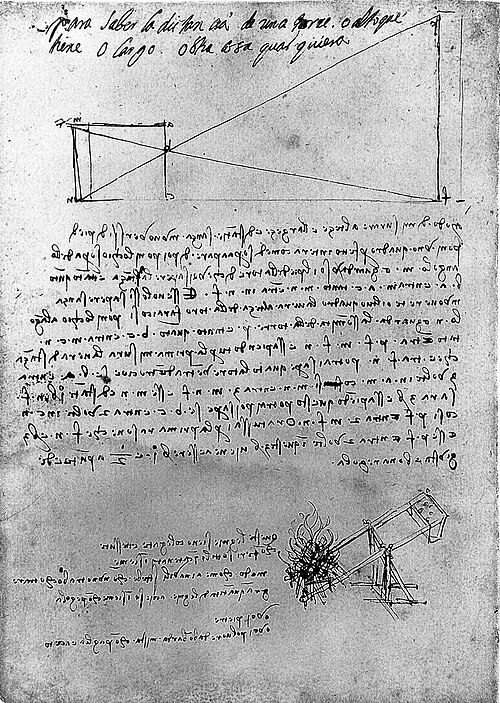
Leonardo da Vinci wrote the Codex Leicester between roughly 1506 and 1510, filling seventy-two loose leaves with observations about water movement, the mechanics of rivers, and the moon’s reflected light. He wrote in mirror script, reading right to left and legible only in a reflection. After his death, the manuscript passed through a succession of Italian collections. In 1717, it was purchased in Rome by Thomas Coke, later the 1st Earl of Leicester, for a sum estimated at around £40. It stayed at Holkham Hall in Norfolk for two and a half centuries, consulted occasionally by scholars but otherwise resting undisturbed.
In 1980, the American industrialist Armand Hammer bought it at Christie’s for $5.1 million. This was an extraordinary figure for any manuscript at the time. He promptly renamed it the Codex Hammer. When it came to auction again in November 1994, Christie’s estimated it at $12 to $16 million. Bill Gates paid $30,802,500.
The price increase was not driven by improvements in authentication. The manuscript’s genuineness had never been seriously questioned. What changed was the accumulated weight of its provenance. Provenance is the documented chain of ownership from an artifact’s creation to its present location. Popular accounts treat it as a tool that proves a thing is genuine. That is partly correct, but provenance does something more fundamental. It creates a story. Gates did not simply acquire seventy-two pages of Leonardo’s notes. He acquired the entire recorded history attached to those pages, and that story was itself the commodity.
This is why the discovery of previously unknown Vermeer paintings creates simultaneous excitement and instability. More Vermeers means the existing scarcity narrative fractures. It also means that any painting whose location between, say, 1680 and 1950 is unknown carries structural uncertainty regardless of technical analysis.
Han van Meegeren understood this process precisely. The Dutch forger’s most celebrated fraud involved selling a fabricated Vermeer titled Christ with the Adulteress to Hermann Göring in 1943 for 1.65 million guilders. The sale succeeded partly because van Meegeren constructed a persuasive fake provenance trail. He built fabricated earlier ownership records that gave the painting a plausible history. When Dutch prosecutors arrested him in 1945 as a Nazi collaborator, van Meegeren revealed the truth. The painting was a forgery he had created himself. To prove it, he painted another “Vermeer” in his prison cell. His entire legal defense rested on demonstrating that the provenance had been invented.
An unprovenienced artifact raises two simultaneous concerns for buyers and auction houses. First, it may be a forgery. Second, it may have been stolen or illegally exported. Since the major auction houses adopted stricter due diligence procedures aligned with the 1970 UNESCO Convention in the late 1990s, items without documented histories before that date face heightened scrutiny. The practical effect has been to increase the premium on artifacts with long, unbroken provenance records and to contract the market for everything else.
An artifact’s historical significance and physical condition are genuine properties. But significance alone is insufficient to generate high valuations. An artifact requires witnesses, court documents, museums willing to verify, and a market willing to transact before its significance can translate into price.
Section 02 · Rarity
Rarity and the Economics of Irreplaceability
The British Guiana 1¢ Magenta of 1856 is the world’s rarest postage stamp. There is exactly one known copy in existence. A twelve-year-old boy named L. Vernon Vaughan found it among a batch of old letters in 1873. He sold it to a local collector for a few shillings. By 1922, it had changed hands several times and was valued at $35,000. In 1980, it sold for $935,000, setting a world record for a stamp. In June 2014, Sotheby’s sold it for $9,480,000.
The stamp’s history rests on a very specific accident. British Guiana’s colonial administration ran out of London-issued stamps in early 1856 and printed temporary replacements locally. The printing was rough. The paper was cheap. The ink was black on magenta stock. Most copies wore out, were discarded, or simply ceased to exist once they had done their job. One survived.
Had Vaughan thrown the paper away, the world’s most valuable stamp would never have existed. That single decision became the entire foundation of a $9.48 million valuation 141 years later.
The distinction here is between rarity and irreplaceability. Rarity is a spectrum. A manuscript might survive in three copies or forty. A coin may exist in twenty specimens or several thousand. Extraordinary value comes from the specific combination of very low quantity with high desirability. Desirability in historical artifacts is determined by historical significance rather than intrinsic quality. The British Guiana 1¢ Magenta is not an artistically interesting stamp. Unlike the Antikythera mechanism, which offers deep technical insights into ancient Greek engineering, the stamp is simply a small, octagonally trimmed piece of magenta paper with a rough impression of a three-masted sailing ship. Its entire claim to value rests on being the only surviving specimen of a specific printing run from a specific colony in a specific year.
The Magna Carta makes the logic even clearer by existing in multiple copies. Four versions of the 1215 original survive. Two are at the British Library, one at Lincoln Cathedral, and one at Salisbury Cathedral. In 2007, David Rubenstein paid $21.3 million at Sotheby’s for one of the 1297 confirmations, the only copy then in private hands. The others, technically equivalent as historical documents, sit in museums where they cannot be purchased at any price.
The $21.3 million price tag was not for a unique document. It was for the specific combination of authenticity, precise dating, and availability. The word “priceless” expresses something technically true. When an artifact cannot be traded, it has no market price. But this does not mean it has no value. It means its value cannot be expressed in monetary terms. The one that could be bought gave the others their reference point.
Historians and philatelists have occasionally noted that the category “only known example” is not entirely stable. New specimens have been discovered for stamps and manuscripts previously thought unique. The British Guiana stamp’s status as the world’s sole survivor rests on 150 years of dealer and collector network surveillance. It is a compelling form of distributed documentation, but it is not infallible.
Section 03 · Authentication
Verification and Evidence
Value requires verification. The part of the historical artifact market that operates mostly invisibly relies on curators, conservation labs, auction specialists, and archive records that most buyers and sellers never encounter directly.
This verification network became urgently necessary in the late nineteenth century as the market for old masters and antiquities expanded beyond the social networks of the aristocratic connoisseurship system. Much like the engineering of trust behind ancient measurement systems, market confidence required physical proof. Before roughly 1860, the primary authentication method was expert comparison. Specialists assessed artifacts by eye, drawing on accumulated experience and comparison with known examples. The system was highly dependent on reputation networks and was easily manipulated by skilled forgers with access to period-appropriate materials.

The twentieth century added scientific testing. Laboratories developed dendrochronology for wooden panels, carbon-14 dating for organic materials, X-ray fluorescence for paint pigment analysis, infrared reflectography for underdrawings, and ultraviolet examination for restoration evidence. Each technique closed some forgery loopholes while creating others. Carbon dating works imprecisely on artifacts less than five hundred years old. X-ray analysis can identify modern pigments but cannot distinguish an authentic old work from a skilled nineteenth-century copy using period-appropriate materials.
When a major work comes to market, authentication is rarely a single judgment. It relies on a slow accumulation of cross-referenced evidence. Technical reports, ownership letters, scholarly opinion, and comparison with related works each contribute to a probabilistic assessment rather than a binary verdict.
The Getty kouros case is the sharpest illustration of what happens when this system reaches its limits. In 1985, the J. Paul Getty Museum purchased a marble Greek statue for approximately $9.5 million. This happened after fourteen months of scientific testing, including geological analysis of the marble’s surface. Experts from multiple disciplines authenticated it. Shortly afterward, a group of art historians who examined the statue in person found it stylistically inconsistent with genuine kouroi of the period it supposedly depicted. Subsequent investigations produced contradictory findings. Evidence remains limited, and scholars have proposed several explanations. The Getty still lists the statue’s dating as “about 530 BCE or modern forgery.” Four decades of analysis have not resolved the question.
“The attribution of a painting to Vermeer or Rembrandt is not a fact one discovers. It is a consensus one constructs, and it can be deconstructed.”
John Richardson, A Life of Picasso, on the nature of attributionAuthentication is also disproportionately concentrated in Western museums and English-language scholarly networks. Artifacts from non-Western contexts often lack the dense provenance chains that European and American museums require. This structural asymmetry was partly created by colonial documentation practices, or the absence of them.
Section 04 · The Auction Record
How Auction Rooms Built the Market
James Christie opened his Pall Mall auction rooms in December 1766. Samuel Baker had founded what would become Sotheby’s twenty-two years earlier. Their early catalogs show a mundane mix of household goods, farm equipment, and deceased estate clearances. The modern market for rare artifacts took centuries to build.

The British Guiana 1¢ Magenta illustrates how auction houses transformed raw scarcity into documented commercial history. A single surviving stamp is rare, but rarity alone does not guarantee a high price. Billions of unique items are lost every day without anyone caring. What the British Guiana stamp had was a documented chain of wealthy, highly competitive collectors fighting over it in public auction rooms for over a century.
When it sold at Sotheby’s in 2014 for $9.48 million, buyers were not just paying for a scrap of magenta paper. They were buying its auction history. Auction houses created specialist departments in the nineteenth century to write detailed catalogs. These catalogs provided provenance summaries, condition reports, and authentication records. Over time, the auction catalogs themselves became the evidence of value.
When Sotheby’s or Christie’s sells an artifact, the final price enters a permanent, public ledger. Future buyers, sellers, and appraisers rely on that ledger. The intense collector competition recorded in these rooms proves that an artifact is desired, authentic, and historically significant. The auction house acts as the archive for this competition.
Major Auction Milestones for Historical Artifacts
| Year | Artifact | House | Price | Significance |
|---|---|---|---|---|
| 1816 | Elgin Marbles | British Parliament (not auction) | £35,000 | Establishes principle of legislative acquisition; original valuations now meaningless |
| 1980 | British Guiana 1¢ Magenta | Sotheby’s | $935,000 | First world stamp auction record; created benchmark for 2014 sale |
| 1980 | Codex Leicester | Christie’s | $5.1M (Hammer purchase) | Established manuscript as a category in the $1M+ market |
| 1994 | Codex Leicester | Christie’s New York | $30,802,500 | Most expensive book or manuscript ever sold; Gates restores original name |
| 2007 | Magna Carta (1297 copy) | Sotheby’s | $21.3M | Only copy then in private hands; Rubenstein purchase marks entry of constitutional documents into major market |
| 2014 | British Guiana 1¢ Magenta | Sotheby’s New York | $9,480,000 | Current world auction record for a single stamp |
One important feature of this auction system is that it concentrates information asymmetrically. Major auction houses know far more about the artifacts they sell than almost any buyer. The house’s expert catalog entry represents a selective disclosure of that knowledge.
Section 05 · Inalienability
Artifacts That Escape the Market
The Rosetta Stone’s situation is unusual but not unique. Many of the most significant surviving historical artifacts cannot be purchased at any price. This is not because their custodians have declined offers, but because legal statutes built over the past century have deliberately removed them from commerce.
The British Museum Act of 1963 prohibits trustees from deaccessioning artifacts in the permanent collection except under tightly defined circumstances. These include physical damage that makes the artifact unfit for preservation, exact duplication with other collection items, or illegality of the original acquisition. The act was a deliberate legislative response to growing pressure on museums to sell artifacts or return them to countries of origin. By making sale legally impossible rather than merely undesirable, it placed artifacts like the Rosetta Stone, the Elgin Marbles, and the Sutton Hoo helmet definitively beyond the reach of any private buyer.
When an artifact cannot be sold, it ceases to have a market price, but it does not cease to have value. It may accumulate cultural and symbolic value precisely because it is inalienable. The Rosetta Stone’s absence from the market is inseparable from its cultural weight. It is significant partly because it cannot be owned by any individual. Its value is public, collective, and resistant to monetisation in a way that a privately sold manuscript’s value is not.
Consider what the stone actually represents as an intellectual event. In 1799, it was a piece of carved rock with an inscription no European could read. Its significance was immediately recognised, but that significance was purely potential. It offered the hope that the three-script inscription might provide a key to deciphering ancient Egyptian hieroglyphics. That potential was realised twenty-three years later, in September 1822, when Jean-François Champollion published his decipherment of the hieroglyphic script based on comparison with the stone’s Greek text. The stone is now inseparable from that intellectual achievement. Its cultural value is a product of what has been thought, written, and understood because the artifact exists.
The Parthenon sculptures removed by Thomas Bruce, 7th Earl of Elgin, between 1801 and 1812 present a version of inalienability driven by political dispute rather than law. Elgin claimed to hold Ottoman permission for the removal. Historians still disagree on exactly how much Ottoman permission Elgin actually possessed. Lord Byron, who witnessed the removal, called it vandalism in print. Greece has sought their return formally since 1983, when Minister of Culture Melina Mercouri made the first official repatriation request. The British Museum purchased them from Elgin in 1816 for £35,000, a transaction validated under English law. Some researchers consider the distinction largely legal rather than moral, and the moral and political status remains contested. The British Museum Act prevents return regardless of how the dispute is eventually resolved.
There is an argument, made by some legal scholars and contested by others, that inalienability ultimately increases rather than suppresses the estimated value of protected artifacts because it removes them from the comparison points that set market prices. No Rosetta Stone sale exists to anchor an estimate. The stone’s hypothetical value would have to be derived from what comparable intellectual significance has commanded, and there is no comparable intellectual significance on the market.
Section 06 · Colonial Provenance
The Colonial Question
The Rosetta Stone’s provenance encodes one of the central paradoxes of Western museum collections. It was found in July 1799 by soldiers in Napoleon Bonaparte’s Egyptian campaign, specifically near the town of Rashid in the Nile Delta. Lt. Pierre-François-Xavier Bouchard recognised its significance and had it transported to the Institut d’Égypte in Cairo. After Napoleon’s defeat in Egypt and the British naval victory that followed, the Capitulation of Alexandria in 1801 transferred French Egyptian holdings to British forces. The stone arrived at the British Museum in 1802. Someone carved into the stone’s left side the words: Captured in Egypt by the British Army in 1801.
That inscription is unusual for a museum artifact. Most acquisitions of colonial-era material are documented in ledgers, not carved into the artifacts themselves. Its visibility makes the colonial history explicit in a way that most Western museum collections avoid. Egypt has periodically requested the stone’s return. The archaeologist Zahi Hawass, who served as Egypt’s Minister of Antiquities, made formal repatriation requests in 2002, 2003, and 2009. Each was refused by the British Museum, which cited both the legal impossibility of deaccession under the 1963 Act and what it described as the stone’s role as a shared human heritage best served by its London location.
The UNESCO Convention on the Means of Prohibiting and Preventing the Illicit Import, Export and Transfer of Ownership of Cultural Property, adopted in 1970, established international norms against trafficking in cultural property. But it operates prospectively rather than retrospectively. Artifacts removed before 1970 fall outside the convention’s direct application. British, French, and American institutions have largely refused to apply the 1970 standard retroactively, arguing that doing so would empty Western museums.
Germany has moved differently. In 2022, the Humboldt Forum in Berlin returned 512 Benin Bronzes to Nigeria, marking one of the largest repatriations of colonial-era artifacts in museum history. The UK’s position has remained more cautious, though some independent institutions and university museums have begun making returns where the legal barriers are lower.
This repatriation argument has a direct bearing on historical value. Artifacts removed from Africa, Asia, and the Americas during the colonial period often enter the Western market with missing shipping manifests and sparse letters of ownership. This depresses their commercial value and complicates repatriation claims. Sotheby’s and Christie’s both declined to handle several high-profile artifacts in the 2000s after title questions emerged during pre-sale research. Even basic building materials from ancient cooling systems require clear ownership records before museums will accept them. The practical result has been a compression of the private historical artifact market toward items from documented Western collections where title is unambiguous.
What Survives Becomes History

The Smithsonian’s patent model gallery represents a different approach to historical preservation. Between 1790 and 1880, US patent law required inventors to submit miniature working models with their applications. The Smithsonian holds approximately 30,000 of them. These are small constructions in wood, metal, and fabric representing early textile machinery, agricultural tools, communications devices, and industrial processes. Few are individually significant. Some are crudely made. Almost none would attract a three-figure bid at auction.
Together they constitute an irreplaceable record of American industrial innovation. They were preserved not because anyone judged each artifact priceless, but because a museum systematically collected everything.
The Rosetta Stone survived because a French officer recognised its significance in 1799. The Codex Leicester survived centuries of Italian ownership and English aristocratic custody. The British Guiana 1¢ Magenta survived because one twelve-year-old boy kept it rather than throwing it away.
The artifacts we now regard as priceless are often the products of accidents we have subsequently narrated into inevitability. There were almost certainly manuscripts as remarkable as the Codex Leicester that were lost to fire. Stamps as singular as the British Guiana one wore out. Inscribed stones as significant as the Rosetta Stone were broken for building material. We cannot know what was lost because losses leave no record.
Value in historical artifacts does not reside purely in the items themselves. It accumulates through the decisions of collectors, scholars, and lawmakers to treat certain things as worth preserving. The Rosetta Stone is priceless not simply because it is old or historically significant. Plenty of old, historically significant artifacts have been destroyed. It is priceless because of the sustained human decision, recorded over two centuries, to make it so.
Section 09 · FAQ
Frequently Asked Questions
Q Why can’t the Rosetta Stone be bought?
The British Museum Act of 1963 prohibits the museum’s trustees from deaccessioning artifacts in its permanent collection except under tightly defined circumstances, such as physical damage, exact duplication, or illegality of the original acquisition. The act was deliberately designed to make sale legally impossible rather than merely undesirable, placing the stone permanently beyond any private offer. Egypt has formally requested its return on multiple occasions. The British Museum has declined each time, citing both the 1963 Act and its broader cultural mission.
Q How much did Bill Gates pay for the Codex Leicester, and what is it?
Bill Gates paid $30,802,500 at Christie’s New York on November 11, 1994, making it the most expensive book or manuscript ever sold at the time. The Codex Leicester is one of Leonardo da Vinci’s scientific notebooks, containing 72 loose pages of mirror-script observations written between approximately 1506 and 1510. Armand Hammer had renamed it the Codex Hammer after purchasing it in 1980. Gates restored the original Leicester designation. The manuscript is now loaned periodically to museums worldwide.
Q Why is the British Guiana 1¢ Magenta so valuable?
It is the only known surviving copy of a stamp printed in early 1856 when British Guiana’s colonial administration ran out of London-issued stamps. The printing was rough and temporary, and most copies wore out. One survived, found by a twelve-year-old boy named L. Vernon Vaughan among old letters in 1873. Its value rests on the combination of complete singularity and a documented auction history stretching from the 1870s to the present. It sold for $9,480,000 at Sotheby’s in June 2014.
Q What is provenance and why does it matter for historical artifacts?
Provenance is the documented chain of ownership from an artifact’s creation to its current location. It matters for two reasons. It authenticates by demonstrating continuous custody by identifiable owners, and it builds narrative value that accrues to the artifact over time. Gaps in provenance raise questions about whether it was stolen, forged, or illegally exported. Since the late 1990s the major auction houses have required artifacts to have clear documented histories before 1970 before accepting them for sale.
Q What is the Elgin Marbles dispute?
The Parthenon sculptures, known as the Elgin Marbles, were removed from the Parthenon in Athens between 1801 and 1812 by Thomas Bruce, 7th Earl of Elgin, with documentation he claimed was Ottoman imperial permission. Historians have disputed the authenticity and scope of that permission since the nineteenth century. The British government purchased the sculptures from Elgin in 1816 for £35,000. Greece has formally requested their return since 1983. The British Museum declines, citing the 1963 Act and arguing its title is legally sound.
Q How do auction houses authenticate historical artifacts?
Major auction houses maintain specialist departments that combine visual analysis, scientific testing, database cross-referencing with past sale records, and consultation with external scholars. Authentication is increasingly a probabilistic accumulation of evidence rather than a binary verdict. The Getty kouros case illustrates the limits of the system. A marble Greek statue purchased for approximately $9.5 million in 1985 remains officially listed by the Getty as “about 530 BCE or modern forgery” because art historians found it stylistically inconsistent despite the technical evidence.
If this topic interested you, these investigations connect to the same question:
The systems behind historical value connect to broader questions about how ancient infrastructure, measurement, and engineering shaped the world we inherited.
Section 10 · Sources
Sources and Further Reading
Primary texts, monographs, and peer-reviewed analyses that underpin the claims in this article. Where historians disagree, the disagreement is noted in the text.
- Andrews, Carol. The Rosetta Stone. British Museum Press, 1981. The standard scholarly account of the stone’s discovery, transfer, and decipherment. Primary source for dates, dimensions, and circumstances of the Capitulation of Alexandria (1801).
- Champollion, Jean-François. “Lettre à M. Dacier.” Paris, September 27, 1822. The primary source document in which Champollion announced his decipherment of Egyptian hieroglyphics, making explicit the role of the Rosetta Stone’s trilingual inscription. Reprinted in many anthologies of the history of Egyptology.
- Christie’s New York Sale Records, November 11, 1994. Sale of the Codex Leicester (formerly Codex Hammer), Lot 1. Final hammer price: $30,802,500. Christie’s official sale documentation provides the price and bidding record.
- Kemp, Martin. Leonardo da Vinci: The Marvellous Works of Nature and Man. Oxford University Press, 2006. Standard scholarly biography with detailed discussion of the Leonardo notebooks, their provenance history, and the Codex Leicester’s content. Pages 256–260 cover the manuscripts’ post-death dispersal.
- Sotheby’s New York, June 17, 2014. Sale of the British Guiana 1¢ Magenta. Final price: $9,480,000. Primary auction documentation. Sotheby’s provided full lot notes including ownership history from L. Vernon Vaughan’s 1873 discovery forward.
- Sotheby’s New York, December 18, 2007. Sale of the Magna Carta (1297 issue). Final price: $21.3 million. Purchased by David Rubenstein. Sotheby’s sale catalogue provides detailed condition report and provenance history.
- Greenfield, Jeanette. The Return of Cultural Treasures. 3rd ed. Cambridge University Press, 2007. Comprehensive legal and historical analysis of repatriation disputes, including the Elgin Marbles, the Rosetta Stone requests, and the Benin Bronzes. Primary source for the chronology of Greek repatriation demands.
- Merryman, John Henry. “Thinking About the Elgin Marbles.” Michigan Law Review, Vol. 83, No. 8 (1985), pp. 1880–1923. The foundational legal argument for the “cultural internationalism” position used by institutions resisting repatriation. Contested by Greenfield and others arguing for cultural nationalism.
- UNESCO Convention on the Means of Prohibiting and Preventing the Illicit Import, Export and Transfer of Ownership of Cultural Property. Paris, November 14, 1970. The primary international legal instrument governing cultural property trafficking. Available at: UNESCO official text.
- Spieser, Catherine, and Tomas Lochman. Authentication in Practice. Kunstmuseum Basel, 2010. Technical manual covering scientific and connoisseurship-based authentication methods. Primary source for dendrochronology, carbon dating precision ranges, and the Getty kouros case timeline.