

Auction Records Deep Research Audit
The 20 Rarest & Most Expensive
Historical Artifacts Ever Sold
What drives a collector to spend $80 million on a ceramic bowl? Or $9.4 million on a scrap of faded paper? My reading of the evidence suggests these are not just auction results — they are the points where civilization decided what it could not afford to lose.

There is a moment at every major auction where the room goes quiet. A figure is announced. Paddles stay down. Then one hand rises again — and an object changes hands at a price that rewrites what is possible. I think examining these twenty moments reveals how scarcity, institutional firmware, and cultural memory intersect to value the irreplaceable.
Section I — Imperial & Ancient
The Objects That Rewrote Auction History
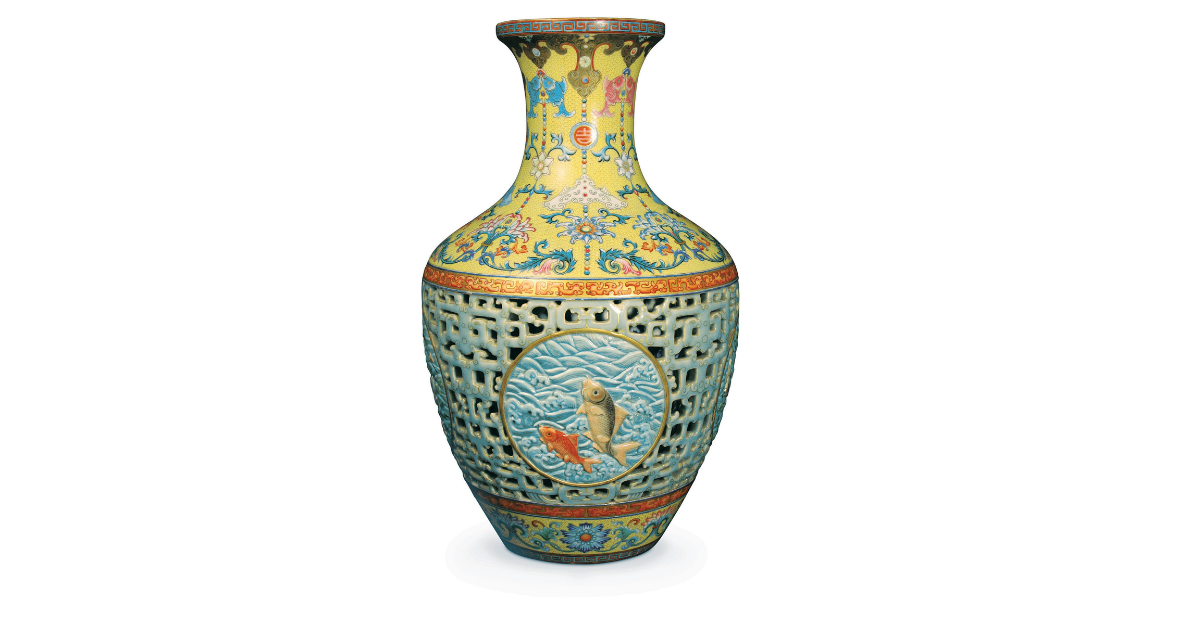
The Pinner Qing Dynasty Vase
For decades it sat in a modest English home, presumed to be a decorative replica worth around a thousand pounds. When a Bainbridge’s specialist examined the four-character Qianlong seal on the base, the initial reappraisal was £1 million. That figure proved a vast understatement.
The vase is a masterwork of Jingdezhen’s imperial kilns: a golden famille rose ground, an extraordinary reticulated outer shell (a double-walled structure carved through to reveal the inner vessel), and a central medallion of two carp leaping through breaking waves — a symbol of dynastic prosperity. How it ended up on a suburban shelf remains one of the great mysteries of the antiques trade. Scholars still debate whether it left China during the turbulent post-Qing decades or earlier.
At the November 2010 auction, a Chinese industrialist bid £43 million against fierce competition. The sale became notorious when he refused to pay the buyer’s premium, triggering a legal dispute that remains one of the most contentious episodes in modern auction history. Among fully paid sales, it remains the highest reported figure for any antique.
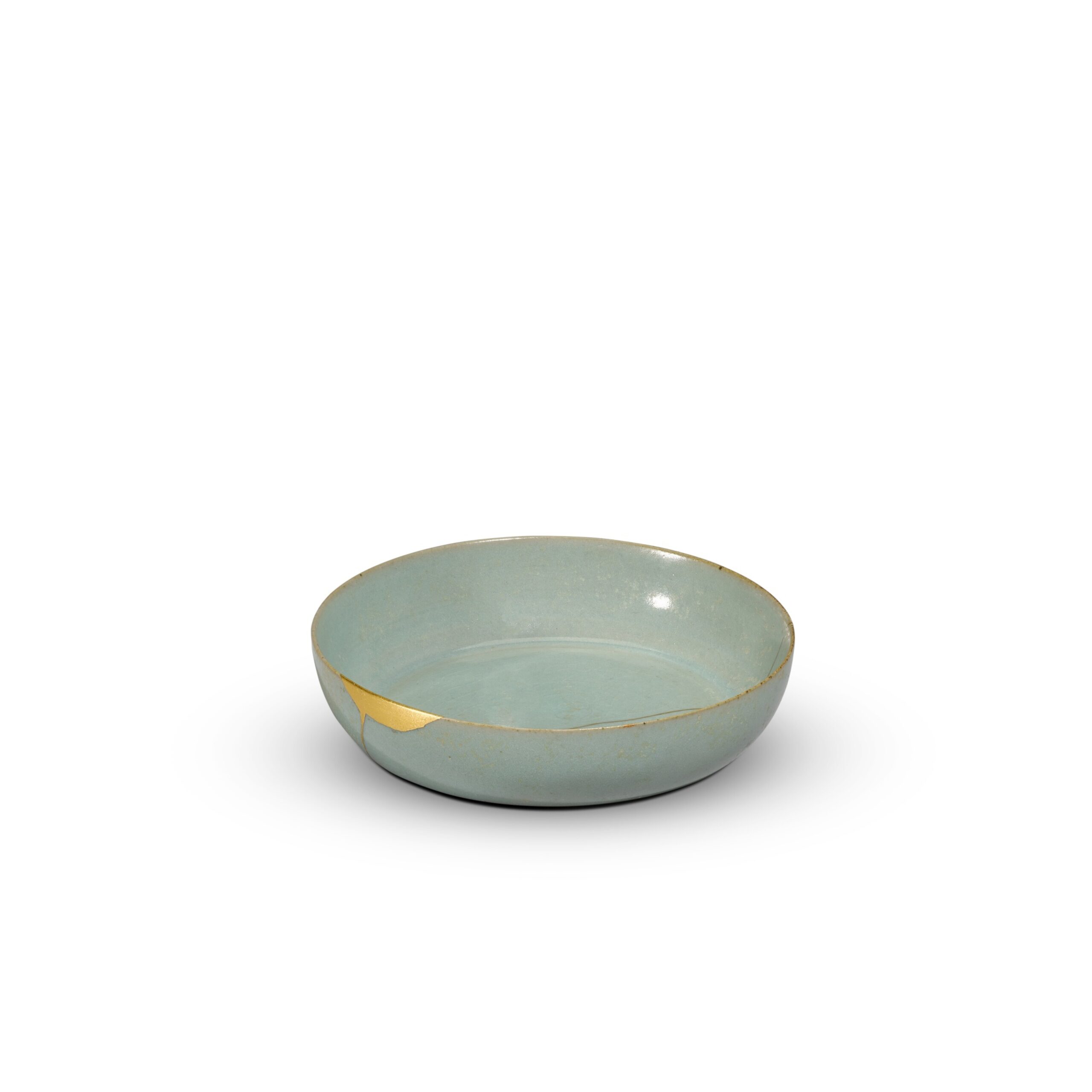
The Ru Guanyao Brush Washer Bowl
Of all Chinese ceramics, Ru ware occupies a category of its own. Produced for barely twenty years during the Northern Song Dynasty, made exclusively for the imperial court, and then abruptly discontinued when the Jin invasion of 1127 scattered the craftsmen — fewer than ninety authenticated Ru pieces are known to survive worldwide. Most live inside institutional collections and rarely change hands.
This brush washer possesses every hallmark of authentic Ru: the pale sky-blue celadon glaze that Song connoisseurs described as “blue sky after rain,” the distinctive hairline crackle called crab-claw, and a gold kintsugi repair on the lower rim that, far from diminishing its value, records centuries of careful stewardship. It sold at Sotheby’s Hong Kong in October 2017 for HK$294.3 million — a world record for any Chinese ceramic at the time.
With fewer than 90 authenticated Ru pieces known globally, chemical and stylistic authentication is ironclad. Most surviving specimens reside permanently in secure museum vaults.
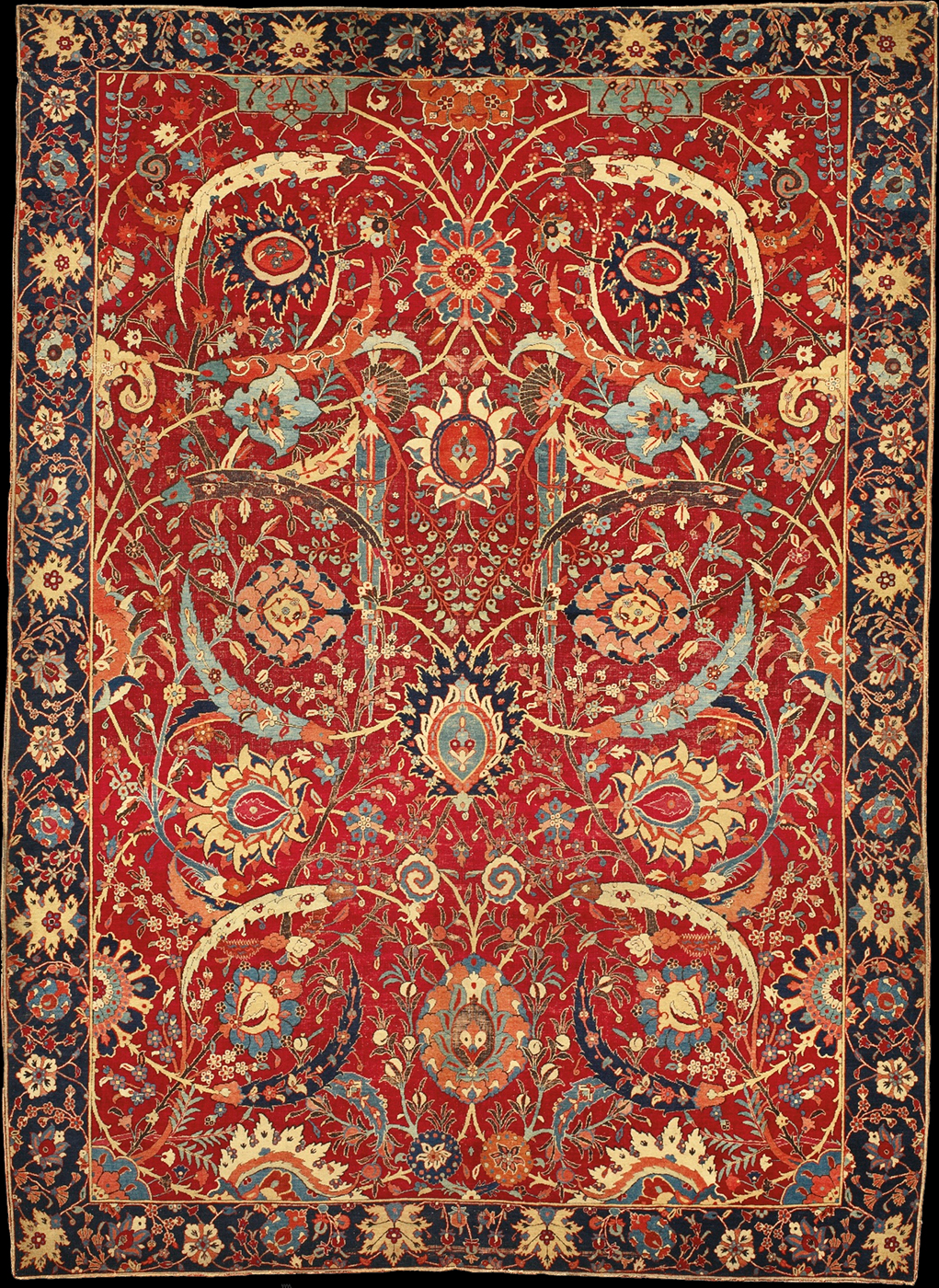
The Clark Sickle-Leaf Carpet
Woven somewhere in Safavid Persia during the seventeenth century, the Clark Sickle-Leaf Carpet is widely regarded as the finest surviving example of the “vase carpet” tradition — a weaving technique so technically demanding that textile historians still cannot fully reconstruct how it was done. No complete working example of the loom type required has ever been identified.
The deep crimson field, the swirling arabesque tendrils, the curving sickle-shaped leaves branching from teal and ivory palmette medallions — each square inch represents thousands of individually hand-tied knots. The palette, sourced from Silk Road dyes, has held its intensity for four centuries. When it sold at Sotheby’s New York in June 2013 for $33.8 million, it shattered all previous records for any textile sold at auction.
“The system of value that governs rare objects is not about beauty or age alone — it is about the impossibility of substitution. When there is only one, the price becomes a philosophical statement.”
The Historical Insights Research Notes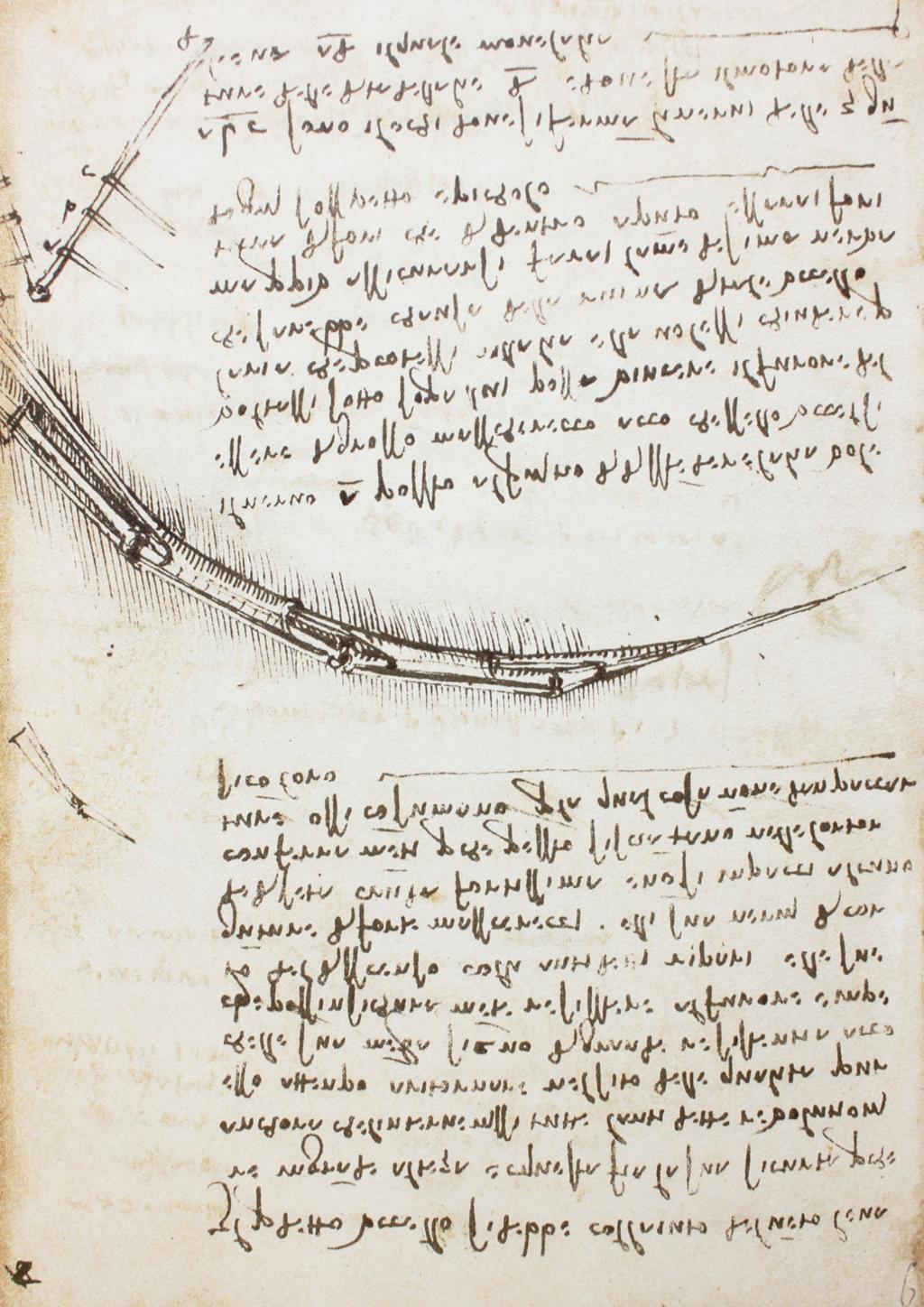
The Codex Leicester — Leonardo da Vinci
In November 1994, Bill Gates paid $30.8 million for a 72-page scientific journal — the most expensive manuscript ever sold at public auction. Adjusted for modern inflation, that figure exceeds $65 million. The Codex Leicester was written and illustrated by Leonardo da Vinci between 1506 and 1510, in his characteristic mirror script: right-to-left, legible only when reflected. Leonardo was left-handed and found this entirely natural.
The pages cover his revolutionary observations on water dynamics, the luminosity of the Moon, fossil formation, and atmospheric optics. Approximately thirty da Vinci notebooks survive; all are now either institutionally held or in private billionaire collections.
Gates scanned the entire manuscript and released it as a Windows 95 screensaver — briefly making the world’s most expensive book the most widely viewed document in history.
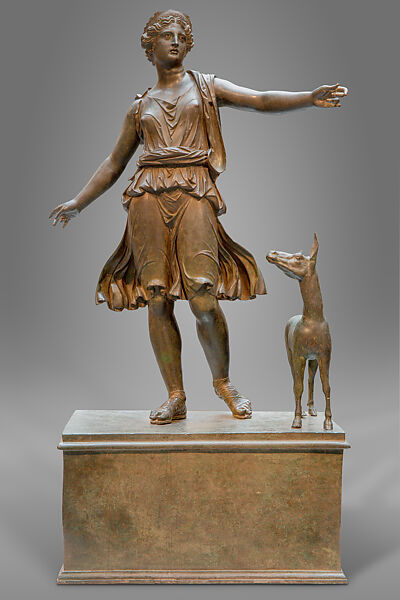
Artemis and the Stag
In the 1920s, workers excavating in Rome unearthed a massive bronze figure and had no idea what they had found. The statue spent decades in private hands, its age entirely unappreciated. It is Artemis, the Greek goddess of the hunt, standing over seven feet tall and captured mid-stride alongside her stag companion — a Roman Imperial casting of the 2nd century CE copying an earlier Hellenistic original.
Large-scale Roman bronzes almost never survive intact; most were melted down for their metal during the medieval period. Finding one of this scale in private hands was remarkable. It sold at Sotheby’s New York in 2007 for $28.6 million, shattering the world record for any classical sculpture.
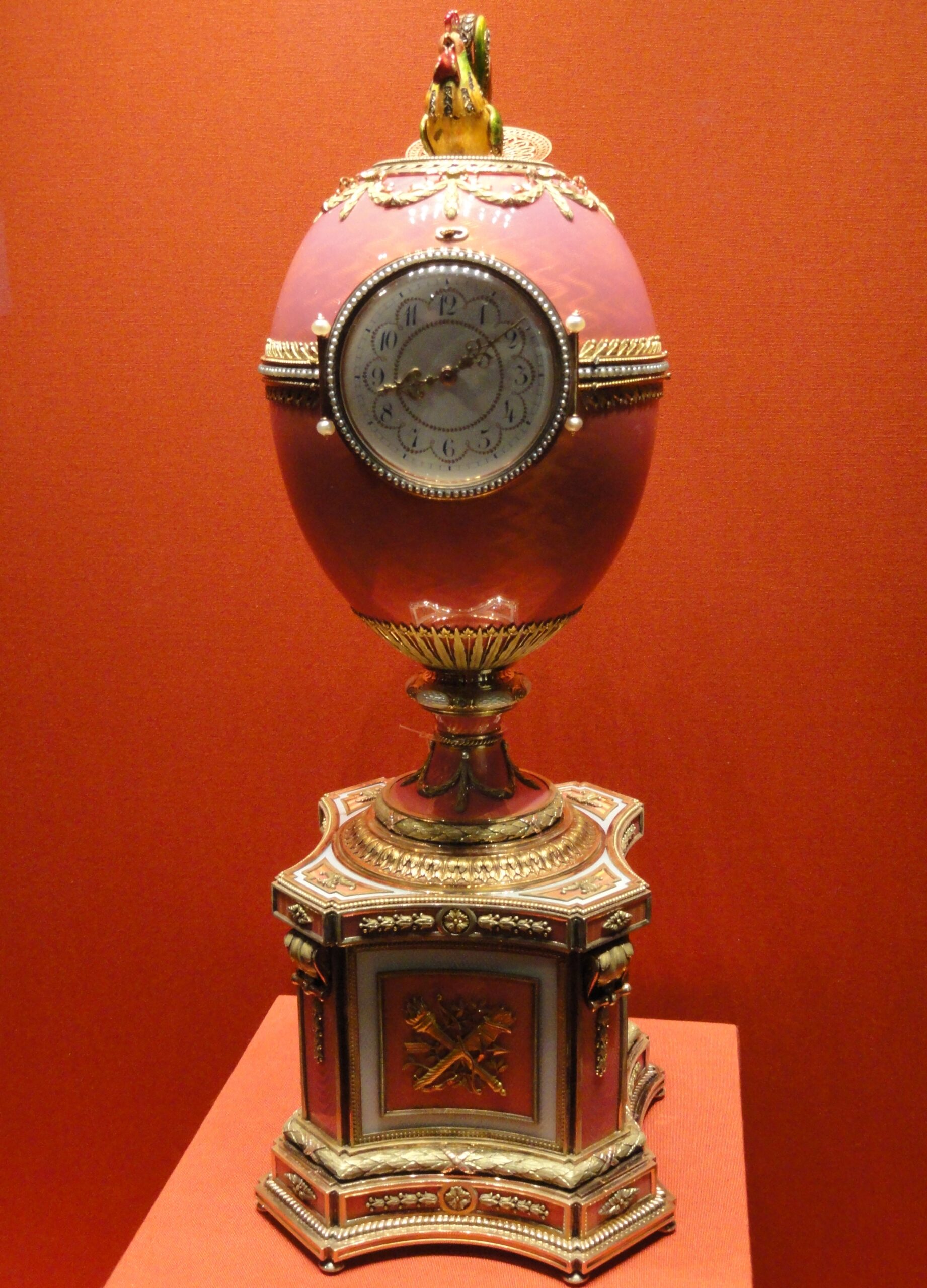
The Rothschild Fabergé Egg
Created in 1902 by the House of Fabergé for the Rothschild banking dynasty, this is a masterwork of miniature engineering: a deep red enamel egg with a clock face set into its body, mounted on a gilded hexagonal pedestal, topped by a jeweled cockerel automaton that rises on the hour to crow and flap its wings. More than a thousand individual components are concealed inside an object you could hold in two hands.
Unlike the famous Imperial Easter Eggs commissioned by Russia’s Tsars — most scattered or destroyed after the 1917 Revolution — the Rothschild Egg remained in private hands for an entire century, largely unknown to scholars. When it sold at Christie’s London in 2007 for $18.5 million, it tripled the previous world auction record for any Fabergé work.
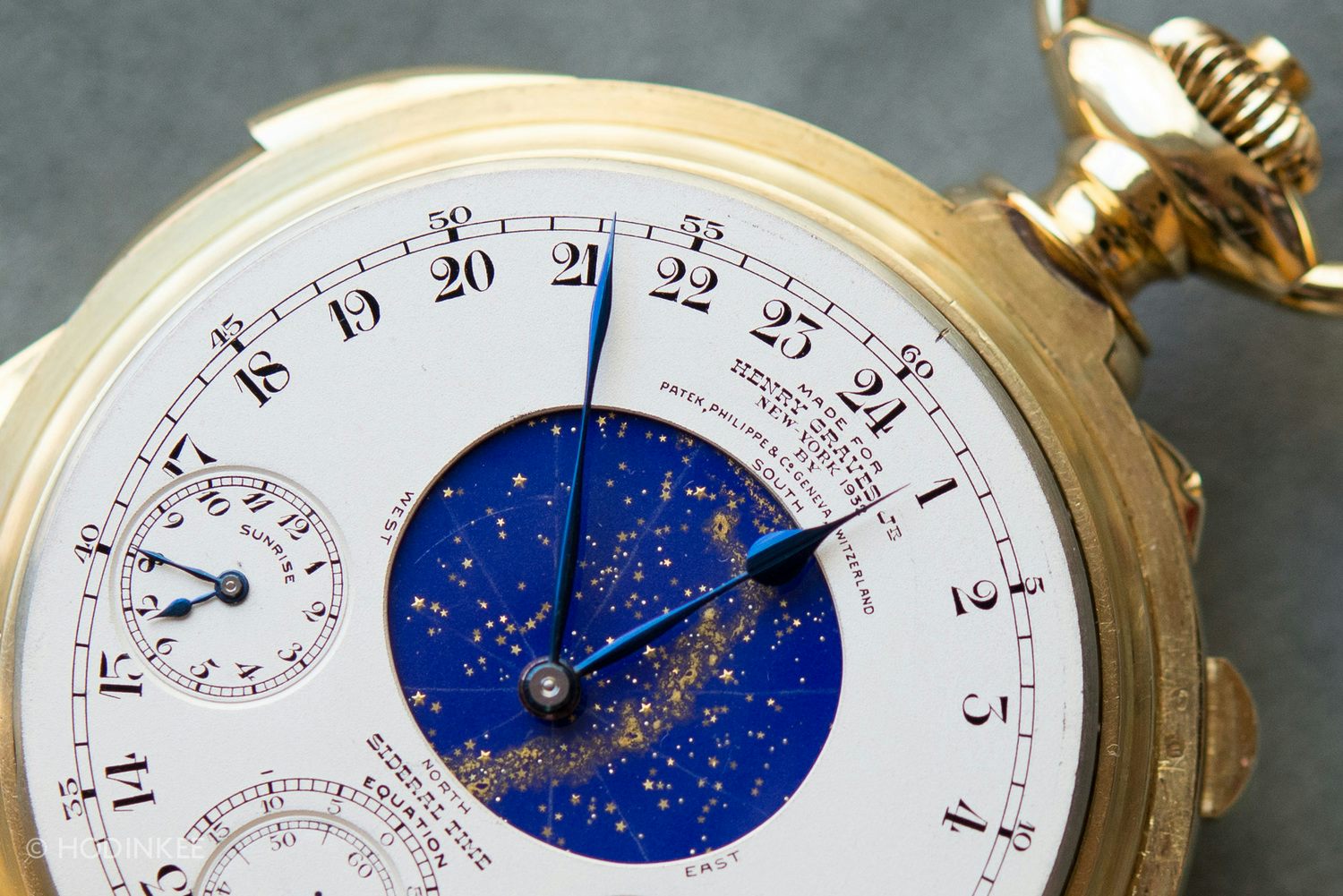
The Patek Philippe Henry Graves Supercomplication
Commissioned in 1925 by American banker Henry Graves Jr. in a private competition with automobile magnate James Ward Packard, the Supercomplication required eight years of total effort — three of design, five of manufacture — every component crafted entirely by hand in Geneva. It contains 24 separate complications, including a perpetual calendar, Westminster chime, minute repeater, and a celestial chart of the night sky precisely as visible from Graves’ Fifth Avenue apartment in Manhattan.
At the moment of its completion in 1932, it was formally assessed as the most technically complex object ever built by human hands. Sold at Sotheby’s Geneva in November 2014 for CHF 23.2 million, it remains the most expensive pocket watch ever to appear at public auction.
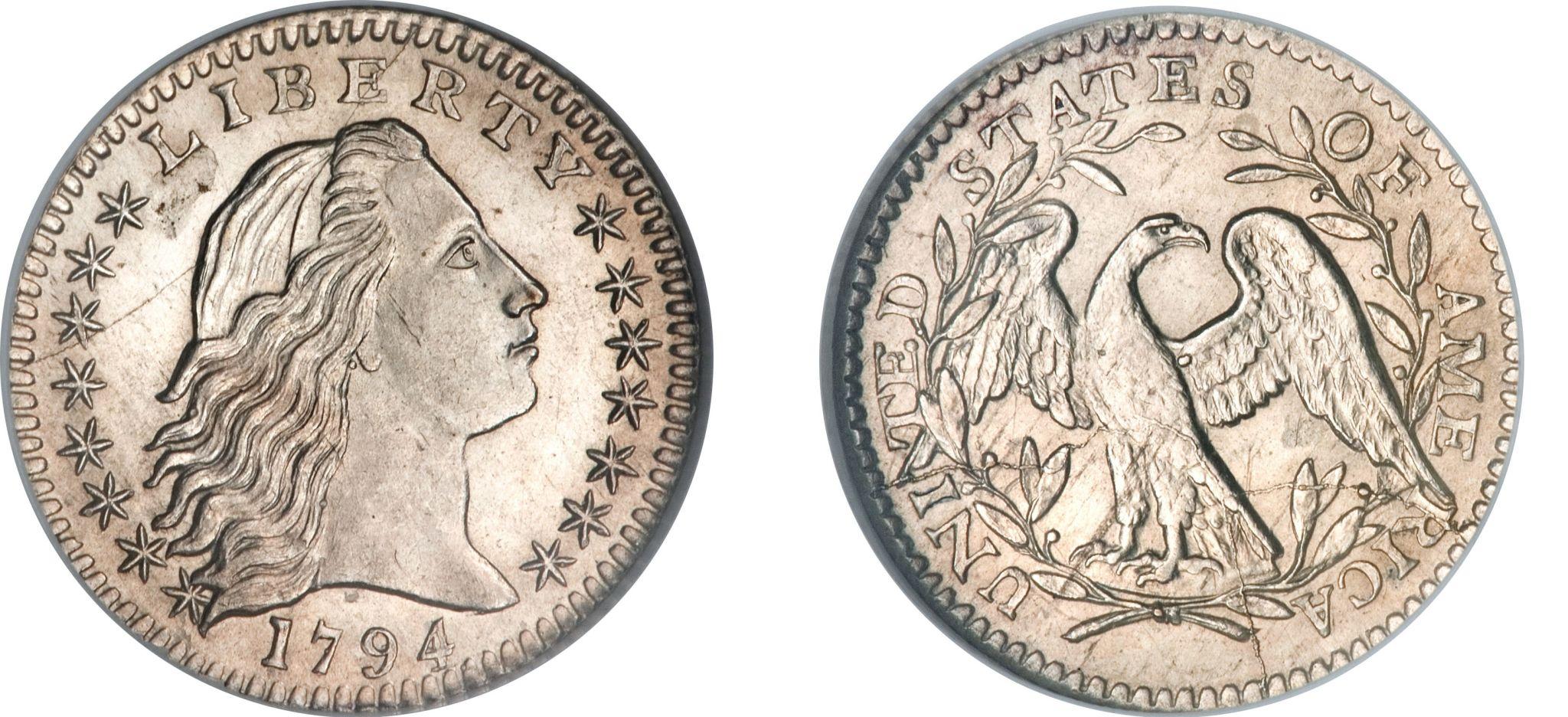
The 1794 Flowing Hair Silver Dollar
On October 15, 1794, the newly established United States Mint struck its first official silver dollars. Approximately 2,000 were produced that day; fewer than 140 are known to survive in any condition. In MS-66 grade — near-perfect, the finest possible — a single specimen exists: the Goddard Coin. Its two faces represent something more than numismatic history. Left: Liberty with flowing unbound hair, ringed by fifteen stars for each state of the young republic. Right: a spread American eagle, wings raised.
The Goddard family purchased this specimen in the 1880s for $1,000. At Stack’s Bowers Galleries in January 2013 it became the first coin in history to exceed $10 million at auction — a record that still stands. It is, in every meaningful sense, the birth certificate of American currency.
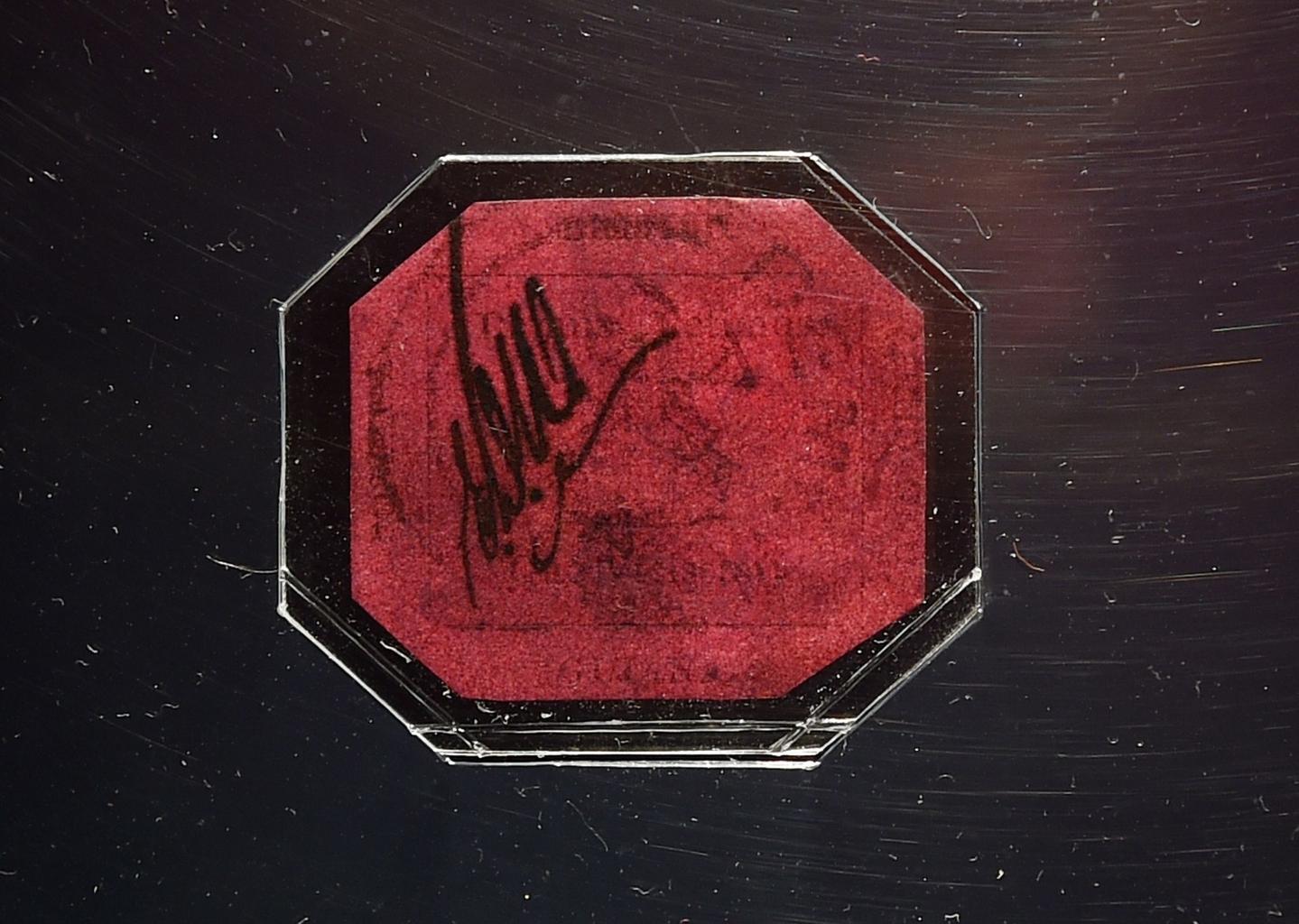
The British Guiana One-Cent Magenta (1856)
What you are looking at sold for $9.4 million. This scrap of magenta paper — originally worth one cent — is preserved inside a clear octagonal case and handled with reverence. By weight, it is the most valuable object per gram ever publicly traded: worth more than diamonds, platinum, or any rare earth element recorded at auction.
The story begins with an emergency. In 1856, the British colony of Guiana ran short of its regular stamp supply from London. The local postmaster improvised, printing a small batch on a newspaper press using a sailing ship design and the Latin motto “Damus Petimus Que Vicissim”. In 1873, a twelve-year-old collector found one inside old family papers and sold it for six shillings. It has changed hands six times since, each time setting a world record.
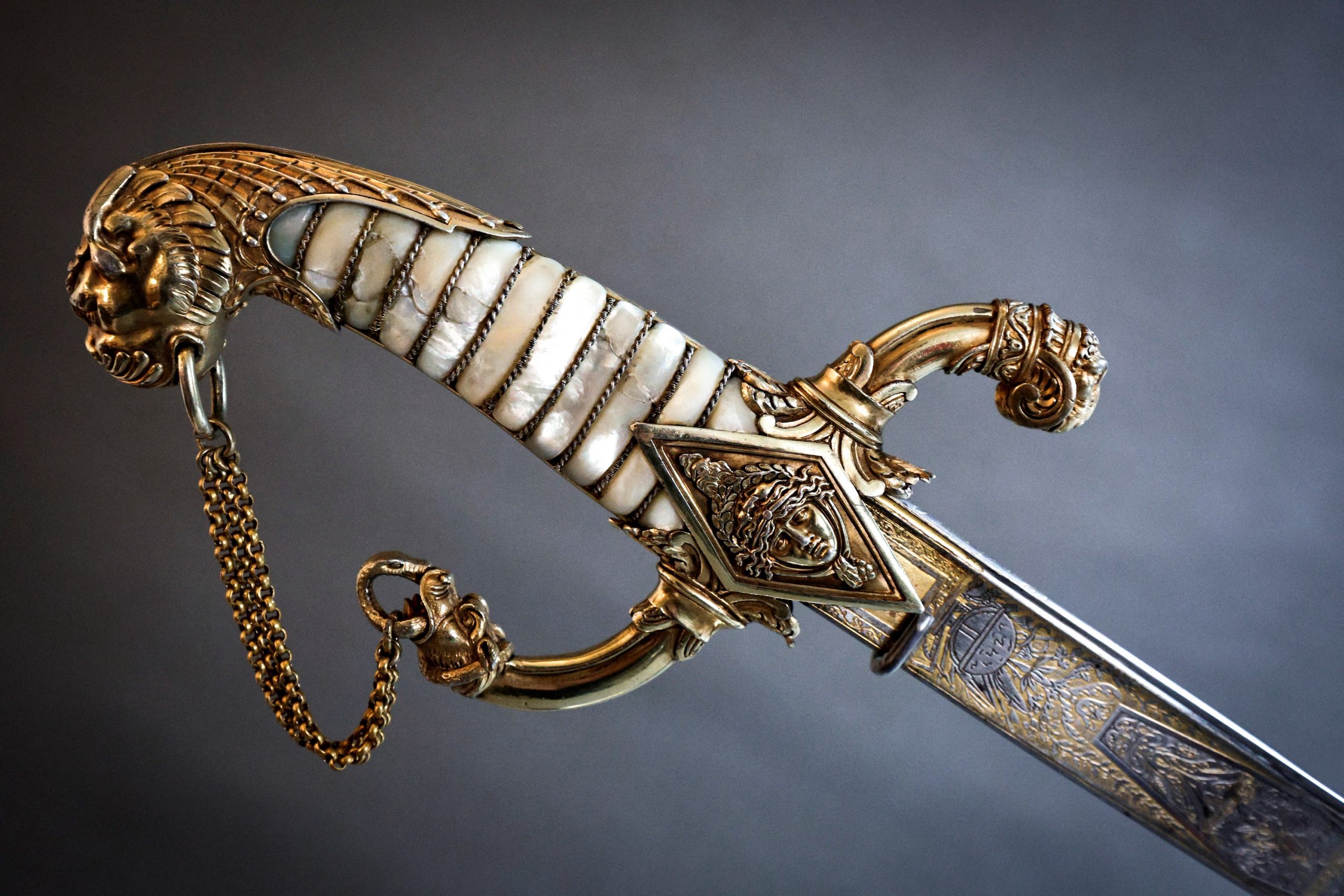
Napoleon Bonaparte’s Marengo Gold Sword
This is the sword Napoléon Bonaparte carried at the Battle of Marengo on June 14, 1800 — the counterattack that shattered Austrian control of northern Italy and secured Napoleon’s grip on France at its most politically precarious moment. It had accompanied him earlier through the Egyptian Campaign of 1798–1799.
The craftsmanship is remarkable: the grip wrapped in alternating bands of mother-of-pearl and gold wire; the pommel cast as a lion’s head in solid gold; the guard bearing a carved portrait medallion. Napoleon was exacting about his personal weapons — this blade was custom-fitted to his small hands. It sold in 2007 for €4.8 million to France’s Fonds des Musées Nationaux, ensuring it remained within French national heritage.
Section II — Gems, Manuscripts & Relics
Ten More Objects That Redefined What Collecting Means

The 1933 Saint-Gaudens Double Eagle
In 1933, the United States Mint struck approximately 445,500 Double Eagle gold coins — $20 pieces bearing Augustus Saint-Gaudens’ famous Liberty design. Then Franklin Roosevelt issued Executive Order 6102, taking America off the gold standard and ordering all gold coins surrendered to the Federal Reserve. Every 1933 Double Eagle was supposed to be melted down. The legal currency became contraband overnight.
Twenty specimens escaped the furnace, and their subsequent history is a series of thefts, seizures, and legal battles that lasted decades. Only a single example may legally be owned by a private citizen — the specimen sold at Sotheby’s in June 2021 for a record $18.9 million after an extended legal agreement with the U.S. government that formalised its unique status. Owning any other 1933 Double Eagle remains a federal crime.

The Pink Star Diamond
At 59.60 carats, the Pink Star is the largest Fancy Vivid Pink diamond ever graded by the Gemological Institute of America. It began as a 132.5-carat rough stone recovered by De Beers in South Africa in 1999. Over the following two years, master cutters spent approximately 20 months of work to reveal the oval brilliant hidden within — a process in which one miscalculation could have destroyed a billion-dollar object entirely.
Pink diamonds derive their colour from a rare structural deformation in the carbon lattice during formation, billions of years underground. At the “Fancy Vivid” saturation level, they are found in perhaps one in every million carats of diamonds mined. When the Pink Star sold at Sotheby’s Hong Kong in April 2017 for HK$553 million, it set the world auction record for any gemstone.

The Blue Moon of Josephine
Blue diamonds owe their colour to trace boron atoms embedded in the carbon lattice — an occurrence of such geological improbability that most large blue diamonds are individually named. The Blue Moon, a 12.03-carat cushion-cut stone, was graded by the GIA as Fancy Vivid Blue and Flawless — a combination essentially without precedent at this scale.
It was discovered in South Africa in 2014 as a 29.6-carat rough and cut by Cora International over a reported seven months. When Hong Kong billionaire Joseph Lau purchased it at Sotheby’s Geneva in November 2015 for $48.5 million, he renamed it “the Blue Moon of Josephine” after his daughter. At $4.03 million per carat, it achieved the highest price per carat ever recorded for any diamond at that time.

The Oppenheimer Blue Diamond
Named for Sir Philip Oppenheimer of the De Beers mining dynasty, who owned it for decades, the Oppenheimer Blue is a 14.62-carat emerald-cut diamond graded Fancy Vivid Blue with VVS1 clarity — the largest Fancy Vivid Blue diamond ever to appear at a public auction. Its emerald cut reflects light in slow geometric planes that give blue diamonds an almost liquid quality.
When it sold at Christie’s Geneva in May 2016 for $57.5 million, it set a new world record for any blue diamond at auction. The combination of size, colour grade, clarity, and the Oppenheimer provenance made it a convergence of factors that may not recur in a generation.

The Guennol Lioness
Standing just 3.25 inches tall and carved from limestone approximately five thousand years ago in ancient Mesopotamia, the Guennol Lioness is the oldest object on this list by a considerable margin. It depicts a standing female figure with a lion’s head and human body — a deity or spirit of unknown religious function from a civilisation that predates Egypt’s Old Kingdom. The carving’s sophistication is extraordinary for its period.
Acquired by American collector Alastair Bradley Martin in the late 1940s, it was eventually donated to the Brooklyn Museum, which exhibited it for decades before deaccessioning it. It sold at Sotheby’s New York in December 2007 for $57.2 million — the highest price ever paid for a sculpture or three-dimensional work of art at that time.

The Lady Blunt Stradivarius
Antonio Stradivari made approximately 1,100 instruments in his lifetime; around 650 survive. Among them, the Lady Blunt of 1721 is exceptional not for its provenance alone but for its near-miraculous state of preservation. Most Stradivari violins have been played continuously for centuries, re-graduated, repaired, and adjusted. The Lady Blunt has been played remarkably little, leaving its original varnish, graduation, and bass bar largely intact — making it perhaps the purest surviving example of how Stradivari actually built an instrument.
It was owned by Lady Anne Blunt, granddaughter of Lord Byron, who kept it in unusually stable conditions for decades. When auctioned in June 2011 by Tarisio for £9.8 million ($15.9M), proceeds went to earthquake relief in Japan.

The Codex Sassoon
Dating from the late 9th or early 10th century CE, the Codex Sassoon is the earliest and most complete Hebrew Bible in existence. It contains all 24 books of the Hebrew canon — a feat of scribal labor at a moment when each copy required months of painstaking work. It bridges the historical gap between the Dead Sea Scrolls and the standardised Masoretic texts used in modern editions.
Its name derives from David Solomon Sassoon, the Iraqi-Jewish collector who acquired it in the 20th century. When it sold at Sotheby’s New York in May 2023 for $38.1 million, it was purchased by ANU: Museum of the Jewish People in Tel Aviv, ensuring it remained accessible to scholars and the public.

The Rothschild Prayerbook
Created in the workshop of Gerard Horenbout in Ghent or Bruges around 1505–1510, the Rothschild Prayerbook is one of the most richly illuminated Books of Hours ever produced. Its 67 full-page miniatures represent the peak of the Flemish illumination tradition — a style that influenced the entire Northern European painting movement.
The manuscript spent centuries in the Rothschild family collection before being seized by the Nazis in 1938 and dispersed across Europe. Its postwar journey through various hands, and its eventual restitution to the Rothschild heirs, mirrors the broader story of cultural plunder and recovery. It sold at Christie’s New York in January 2014 for $13.6 million.

The T206 Honus Wagner Card
The T206 Honus Wagner is the most famous sports collectible in history, and its rarity has an unusual origin. Around 1909, the American Tobacco Company included portrait cards of baseball players in cigarette packs. Wagner, the Pittsburgh Pirates shortstop and one of the greatest players of the dead-ball era, demanded his image be withdrawn — objecting to his likeness being used to sell tobacco to children. Production stopped quickly, leaving only a small number distributed.
Estimates suggest fifty to two hundred examples survive in various conditions. The card sold by Goldin Auctions in 2021 for $7.25 million set a new record for any sports card at the time.

The 1297 Magna Carta Manuscript
Originally issued by King John in 1215 and reissued in modified form under Edward I in 1297, the Magna Carta is the foundational document of constitutional law in the English-speaking world. It established the principle that no person — including a monarch — was above the law. Its clauses on due process and the right to a fair trial formed the basis of common law that eventually informed the American Bill of Rights.
Only four copies of the 1297 version survive. This specimen was sold at Sotheby’s New York in December 2007 for $21.3 million to David Rubenstein, who purchased it specifically to ensure it remained on public display at the National Archives in Washington, D.C. It is not merely an artefact. It is an argument, still being made, about the limits of power.
On the Economics of the Irreplaceable
Every object on this list shares one characteristic that no price tag can fully capture: the impossibility of substitution. You can commission a new violin, pour a new coin, or write a new book. You cannot recreate a 12th-century Ru bowl, or a stamp printed in a colonial emergency that lasted three weeks, or the specific watch that a banker ordered from Geneva as the culmination of his life’s collecting obsession.
What these auctions reveal is not simply that wealthy collectors exist — they always have — but that certain objects carry a narrative density that the market treats as a separate category of value entirely. The 1933 Double Eagle isn’t just gold; it is the story of a government that tried to erase its own currency and failed. The Codex Sassoon isn’t just parchment; it is the most complete surviving transmission of a foundational human text. The price is the number. The reason is something else.
Sources & Further Reading
- Primary Auction House Records: Verified hammer prices and buyer’s totals from Sotheby’s, Christie’s, Bainbridge’s, Stack’s Bowers, and Tarisio.
- The British Museum: Curatorial records and provenance documentation for rare antiquities and manuscripts.
- Gemological Institute of America (GIA): Grading reports and technical analysis data for the Pink Star, Blue Moon, and Oppenheimer diamonds.
- Library of Congress & National Archives: Constitutional and manuscript preservation archives regarding the Magna Carta and early American currency.
Frequently Asked Questions
Answers to the most-searched questions about rare objects, auction records, and what drives extraordinary prices.
What is the most expensive historical artifact ever sold at auction?
The highest reported hammer price for any antique is the Pinner Qing Dynasty Vase at £43 million ($80.2M) at Bainbridge’s London in 2010. Among fully completed sales, the Ru Guanyao Brush Washer ($37.68M, Sotheby’s Hong Kong, 2017) holds the clearest record for a traditional historical antique. The Pink Star Diamond ($71.2M, Sotheby’s Hong Kong, 2017) holds the record for any single object including gemstones.
Why are Ru ware ceramics worth so much more than other Chinese porcelain?
Ru ware was produced for approximately twenty years during the Northern Song Dynasty (960–1127 CE) exclusively for the imperial court. When the Jin invasion ended the Northern Song in 1127, production stopped entirely and the kiln locations were lost. Fewer than ninety authenticated Ru pieces survive worldwide, making them the most coveted category in Chinese art collecting.
Why was the 1933 Double Eagle coin illegal to own?
Franklin Roosevelt’s Executive Order 6102 (1933) required all gold coins to be surrendered to the Federal Reserve as part of taking the United States off the gold standard. All 1933 Double Eagles were meant to be melted before release. Only a single specimen was eventually granted legal ownership status through a 2001 agreement — the one sold at Sotheby’s in 2021 for $18.9M.


[…] Discovery Year1799 LocationRashid (Rosetta), Egypt Current InstitutionThe British Museum, London Verified Historical FactThe top register (hieroglyphs) is the most damaged, missing the initial lines of the decree. Research InsightChampollion’s breakthrough was realizing hieroglyphs contained phonetic signs, not just ideas. History’s Most Expensive Objects […]