Infrastructure History Engineering & Trade
21 Historic Canals That Changed World Trade and Engineering
Canals rarely get the same attention as ships or railways, but they changed how people moved food, fuel, building materials, and ideas. Here are 21 examples that show what happens when people try to make water work for them.

The Ever Given blockage in the Suez Canal in 2021 was a useful reminder that global trade still depends on a few very important stretches of water. A single ship can delay other ships, disrupt schedules, and leave businesses waiting for goods. We tend to talk about global trade as if it belongs to the age of container ships and digital tracking, but the basic idea of shaping waterways for transport is much older.
I think canals are interesting because they make engineering feel very practical. Someone had to move water, cut through hills, manage changing levels, and keep a route usable. Some projects worked brilliantly; others were limited by cost, geography, politics, or maintenance. This article looks at 21 canals, structures, and waterway-related examples. They are not all canals in the strict sense, but each helps explain how waterways shaped trade and everyday life.
Early Hydraulic Management

The Shaduf: Lifting Water by Hand

Canals and Farming Around Memphis
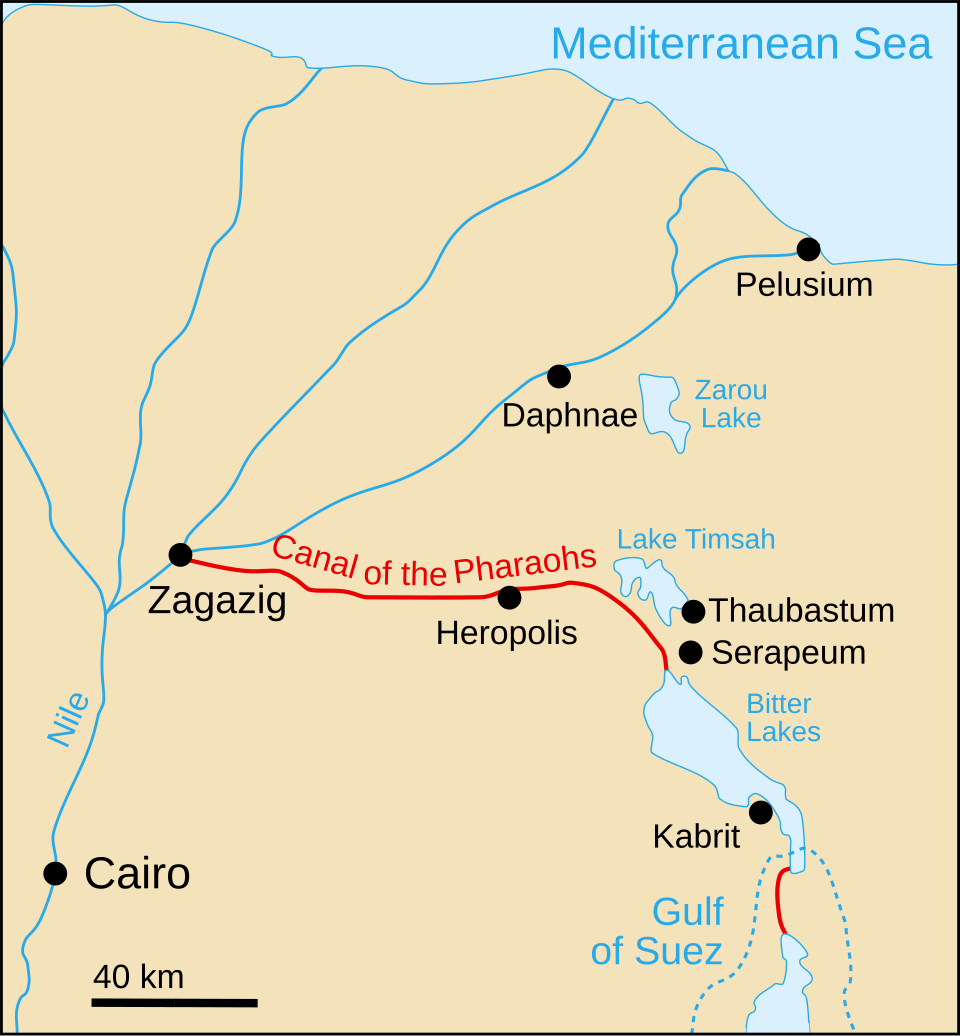
The Ancient Canal Linking Nile and Red Sea

Nero’s Unfinished Corinth Canal
Imperial Engineering Projects

Baodai Bridge and Waterway Management

Suzhou’s Canal-Centred City

China’s Grand Canal Today

Small Boats on Local Waterways
Conquering the Watershed

Keeping the Canal du Midi Supplied

The Fonseranes Locks

The Malpas Tunnel
The Industrial Era

The Bridgewater Canal and Manchester

The Worcester Bar Dispute

The Pontcysyllte Aqueduct

Neptune’s Staircase

The Anderton Boat Lift
Continental and Global Routes

The Erie Canal at Lockport

The Ohio and Erie Canal

The Modern Suez Canal

The Ever Given and a Global Bottleneck
How Canals Handle Changes in Level

How Engineers Move Boats Between Levels
We often assume global supply networks were born in the digital era, but the physical network was laid down centuries ago.
The Weight of History
Canals are easy to overlook now that railways, roads, pipelines, and container ships dominate conversations about transport. But the examples here show that waterways helped connect farms with cities, mines with factories, and inland regions with seaports. Some canals still carry freight; others survive mainly as heritage sites. Both kinds can tell us something about the societies that built them.
I would not say that modern trade depends entirely on designs made centuries ago. Ships, navigation systems, ports, and canal infrastructure have all changed. Still, the basic challenges remain familiar: water has to be managed, routes need maintenance, and a blockage in the wrong place can have consequences far beyond the canal itself. For me, that is the lasting lesson of canal history. Which project on this list do you find most impressive, and is there one I should have included?
Sources & Further Reading
Institutional and heritage resources for readers who want to explore several of these waterways in more detail.
Primary Archives & Technical Surveys
- Historic England: Industrial and canal heritage. Documenting the industrial transition at Castlefield Basin.
- Pontcysyllte Aqueduct and Canal, UNESCO World Heritage Centre. Assessing Telford’s structural innovations in cast iron.
- Boat lifts, Canal & River Trust. Engineering schematics of the counterbalanced hydraulic ram system.
- The Suez Canal, Operational Parameters and History. Noting the continuous deepening protocols and the Ever Given incident.
- Metropolitan Museum of Art collection and research. Archival preservation of the Tomb of Ipuy painting, highlighting shaduf mechanics.
Academic Evidence & Heritage Registries
- The Grand Canal, UNESCO World Heritage Centre. Mapping the integration of the Baodai Bridge and the Sui Dynasty extensions.
- Canal du Midi, UNESCO World Heritage Centre. Technical data on Pierre-Paul Riquet’s elliptical locks and the Malpas Tunnel.
- The Corinth Canal: background on the Roman attempt under Nero. The details of the ancient excavation are debated; consult archaeological and classical-history references before relying on a specific reconstruction.
- Ohio and Erie Canal, US National Park Service. Construction records detailing the use of dry-laid Berea sandstone.
- NASA Earth Observatory. Astronaut photography of the Suez Canal stranding, detailing hydrodynamic bank effects.
Frequently Asked Questions
Early irrigation canals often relied on gravity, so their routes had to follow the available slope. Lifting water to higher fields required additional tools and labour. Canal technology varied widely by place and period.
The Canal du Midi was a major summit-level canal project of the seventeenth century. Pierre-Paul Riquet and his team built feeder channels and reservoirs to supply water to the canal’s highest sections.
The aqueduct’s iron trough and masonry piers allowed the canal to cross the Dee valley with a comparatively light structure. It is a landmark example of how iron could be used in major civil engineering.
Large ships are affected by wind, navigation conditions, water depth, and the interaction between the hull and a canal’s banks. The Ever Given incident showed how quickly a blockage can disrupt shipping, but no single hydrodynamic effect explains every grounding.