Historical Investigation Dark History
20 Real Cursed Objects in History
Some of these objects have peer-reviewed studies attached to them. Some are genuine archaeological finds whose “curse” is simply what the inscription says. Others are little more than a good story with a long paper trail. We examine all twenty on their own evidentiary terms.

Cursed objects in history are artifacts linked to repeated misfortune, death, or unexplained events across multiple owners, sites, or handlers. This guide covers twenty cases spanning the Hope Diamond to Roman curse tablets — some backed by academic study, some by genuine archaeological record, and some resting on firsthand accounts alone. Each entry states clearly which is which.
Section I
The Ten Best-Known Cases
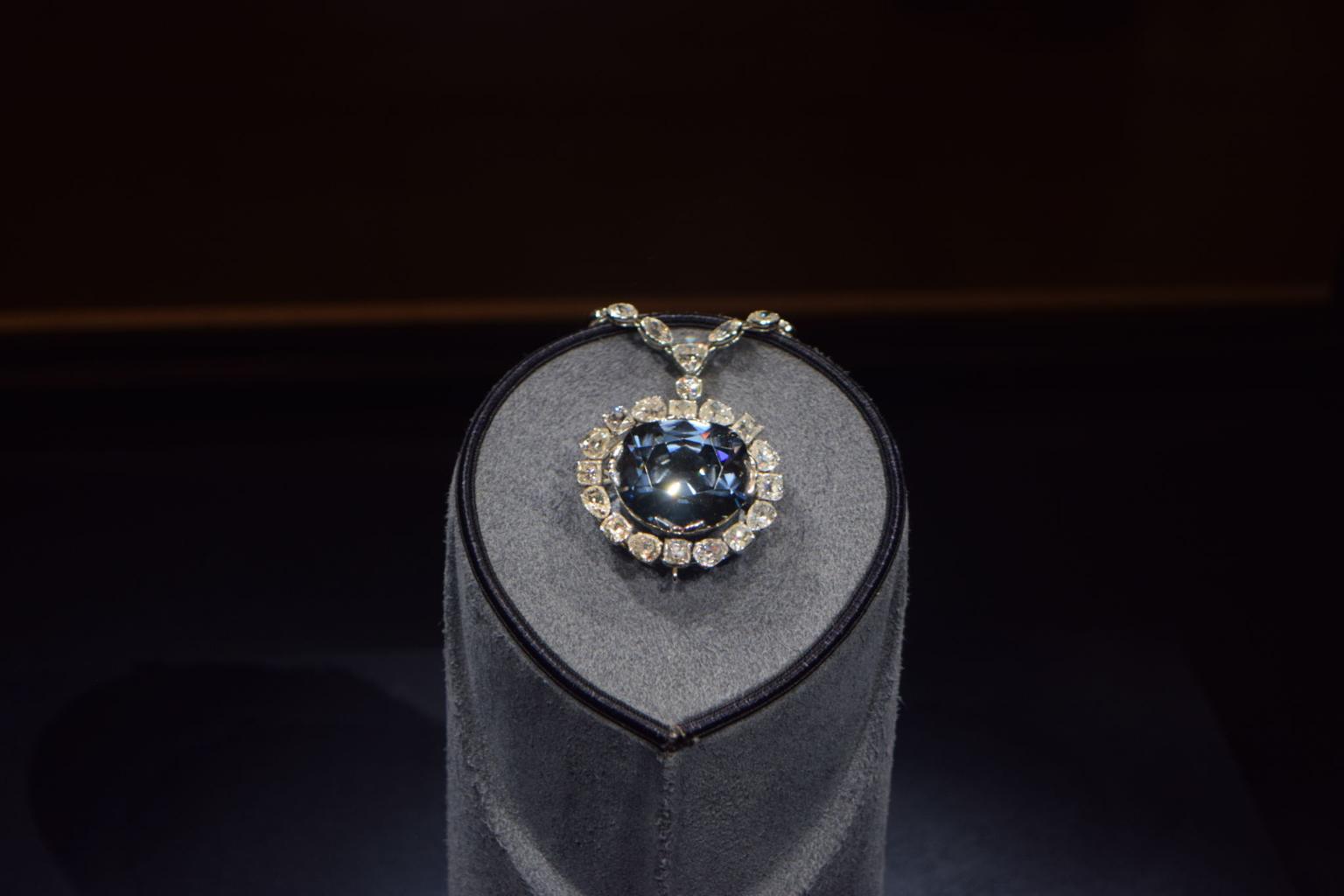
The Hope Diamond, 45.52 carats — Smithsonian Institution, Washington D.C.
The Hope Diamond — The Longest Documented Ownership Chain
The Hope Diamond’s traceable history starts in 1666, when French merchant Jean-Baptiste Tavernier purchased a 112-carat blue stone reportedly taken from a temple in southern India. Tavernier died in Russia at 84. While stories frequently describe a mauling by wild dogs, this detail is largely a 20th-century legend entirely unsupported by historical records. King Louis XIV bought the stone, had it cut to 67 carats, and died of gangrene. His grandson Louis XVI and Marie Antoinette, who later possessed it, were both guillotined in 1793 — a documented historical fact, though attributing the Revolution to a gemstone is not.
The stone resurfaced in 1839 in the collection of Henry Philip Hope, giving it its current name, and the Hope family was bankrupted within two generations — a matter of financial record. Evalyn Walsh McLean, who bought it in 1910, lost her son in a car accident and her daughter to a drug overdose; these are documented family tragedies, though whether the diamond caused them is, by definition, unprovable. It is consistently ranked among the most expensive historical items ever sold before Harry Winston donated it to the Smithsonian Institution in 1958 by registered post. It has been safely on public display since.
Documented Tragedies
- Jean-Baptiste Tavernier (1689) — Died in Russia, aged 84; wild dog folklore debunked
- Louis XVI & Marie Antoinette (1793) — Both guillotined during the French Revolution
- Henry Philip Hope (1839) — Family bankrupted within two generations of acquiring the stone
- Evalyn Walsh McLean (1947) — Son killed in car accident; daughter died of overdose
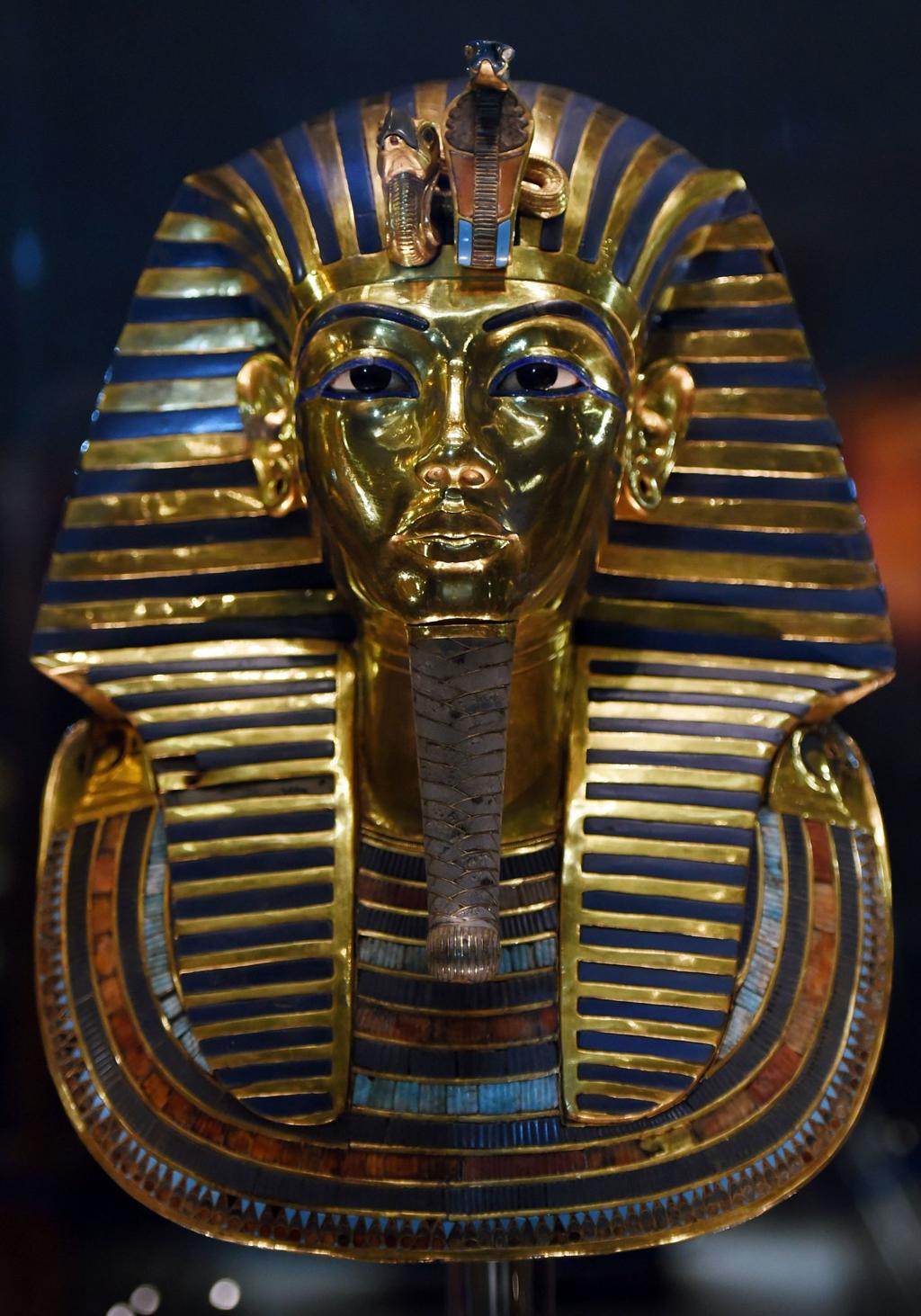
The golden death mask of Tutankhamun, c. 1323 BCE — Egyptian Museum, Cairo
The Pharaoh’s Curse — The One Case With a Peer-Reviewed Study
On November 4, 1922, Howard Carter’s team broke through the sealed entrance of tomb KV62 in the Valley of the Kings. Lord Carnarvon, who financed the dig, died five months later of blood poisoning. Twelve people connected to the discovery died within seven years — a rate unusual enough that a 2002 study in the British Medical Journal examined the deaths statistically and concluded they were “unlikely to be due to chance alone.”
The leading non-supernatural explanation for this unexplained historical mystery involves ancient mold spores, including Aspergillus niger, preserved for 3,000 years in a sealed, near-airless chamber, potentially causing fatal respiratory infections in those with compromised immune systems. Howard Carter, who had the longest direct exposure, lived until 1939 — seventeen years after the opening.
Death Record
- Lord Carnarvon (1923) — Blood poisoning, 5 months after tomb opening
- Sir Archibald Douglas Reid (1924) — X-rayed the mummy; died 3 days later
- Arthur Mace (1928) — Led the unsealing; died of unexplained wasting illness
- +9 additional deaths — Documented in the 2002 BMJ statistical study

Reproduction of the Crying Boy print series by Giovanni Bragolin, c.1950s
The Crying Boy — Partly Explained, Never Fully
In September 1985, The Sun reported that a mass-produced print of a weeping child — sold cheaply across British homeware stores — was repeatedly found undamaged in the ashes of house fires. A Yorkshire fire brigade test confirmed the prints were abnormally fire-resistant, attributable to the varnish used and a backing that caused the print to fall face-down in a fire. That explanation is scientifically documented. What it does not fully account for is the consistency of the effect across prints from multiple different manufacturers.
Over 2,500 readers mailed in their prints for public destruction after the report. This response is a matter of newspaper record, even though the underlying “curse” claim is folklore.
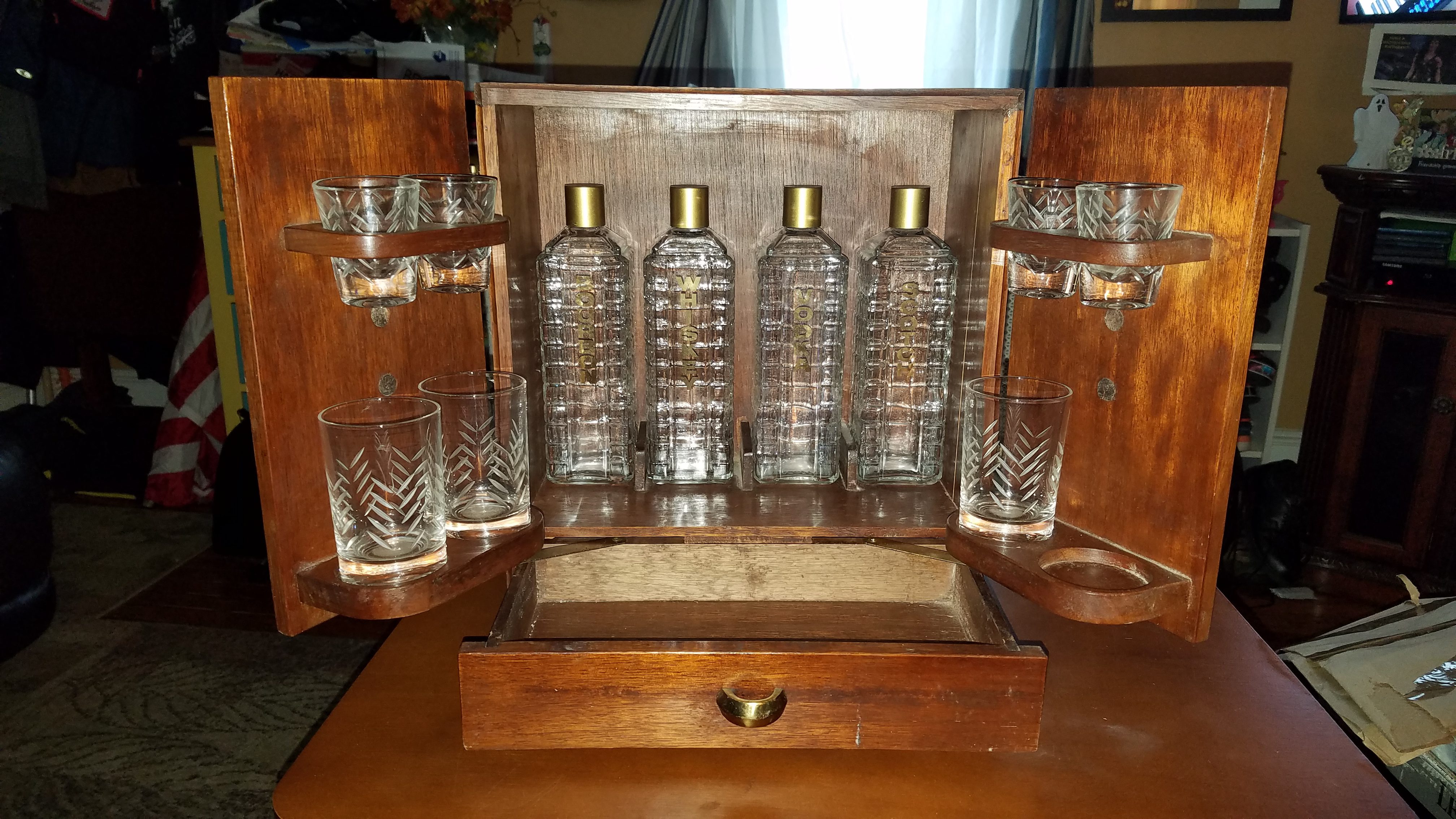
The Dybbuk Box, antique wine cabinet, c. 1900s Poland — Zak Bagans’ Haunted Museum, Las Vegas
The Dybbuk Box — Six Owners, One Recurring Story
The Dybbuk Box entered public awareness through a 2001 eBay listing, in which seller Kevin Mannis described a wine cabinet said to have belonged to a Holocaust survivor who warned it contained a dybbuk — a malicious spirit in Jewish folklore. Six subsequent owners independently reported similar symptoms: a recurring nightmare of a hag-like figure, unexplained bruising, and a smell described as cat urine mixed with jasmine.
These accounts are firsthand and recorded, not formally peer-reviewed. The detail researchers find hardest to dismiss is the reported convergence — several owners described nearly identical experiences before learning what prior owners had reported. It was sold at paranormal auction in 2021 for a reported $280,000 and remains sealed at Zak Bagans’ Haunted Museum.
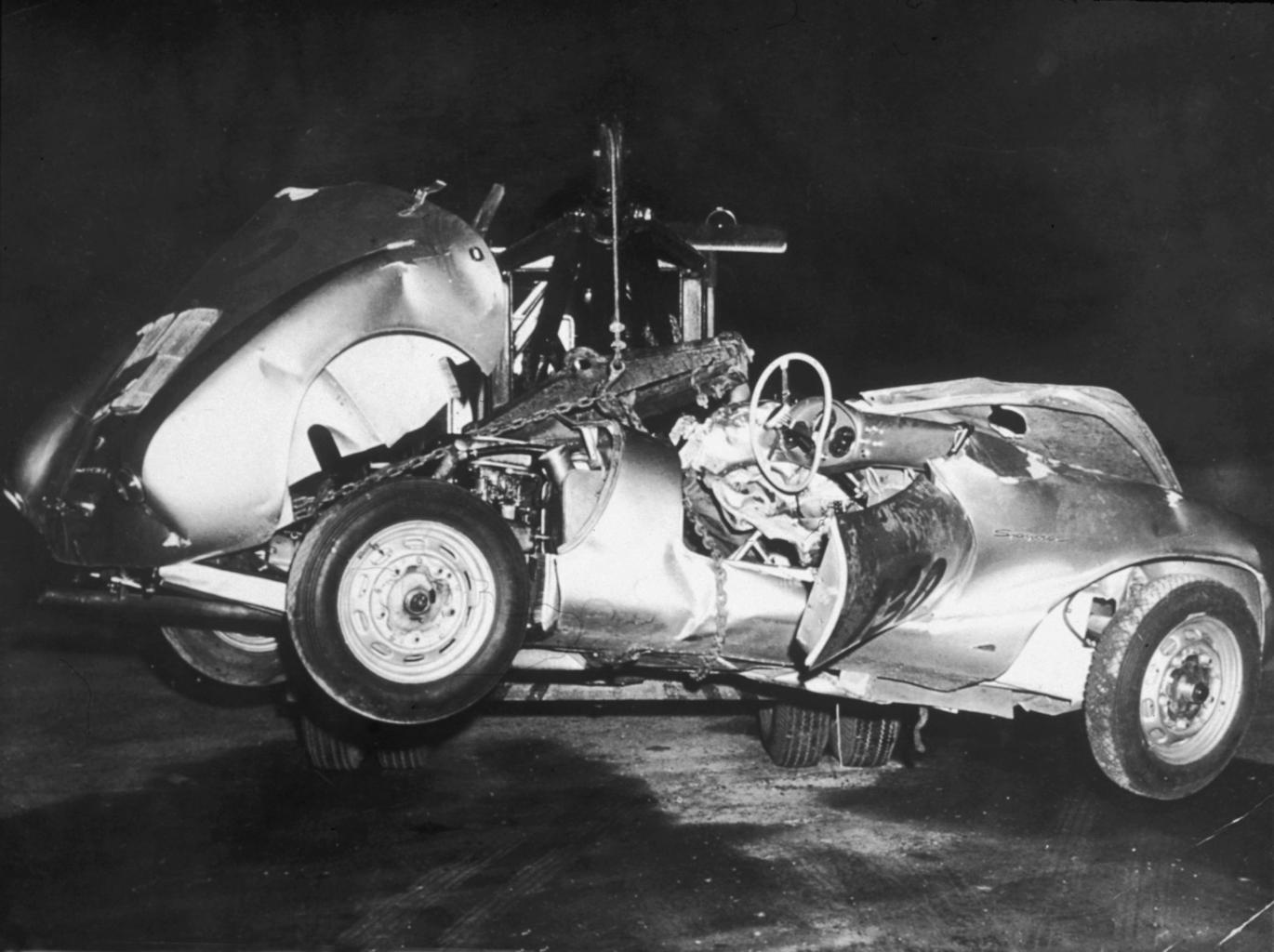
James Dean beside the Porsche 550 Spyder ‘Little Bastard’, days before the fatal crash, 1955
The Little Bastard — Documented Deaths, Then a Disappearance
On September 30, 1955, James Dean was killed when his Porsche 550 Spyder collided with another car near Cholame, California — nine days after he acquired it. Custom-car builder George Barris later sold engine and drivetrain parts from the wreck to two doctors, Troy McHenry and William Eschrid, who crashed simultaneously in separate cars at a 1956 race in Pomona; McHenry was killed. This sequence is documented in contemporary motor-racing press.
The car shell was subsequently used as a safety exhibit, injuring a mechanic and a student in separate incidents, before vanishing from a transport truck in 1960. It was never recovered, and no theft was ever reported.
The system of value that governs cursed objects is often a mixture of selective memory and confirmation bias. Once an artifact is labeled dangerous, every ordinary misfortune is recorded, and every peaceful year is forgotten.
The Historical Insights Research Notes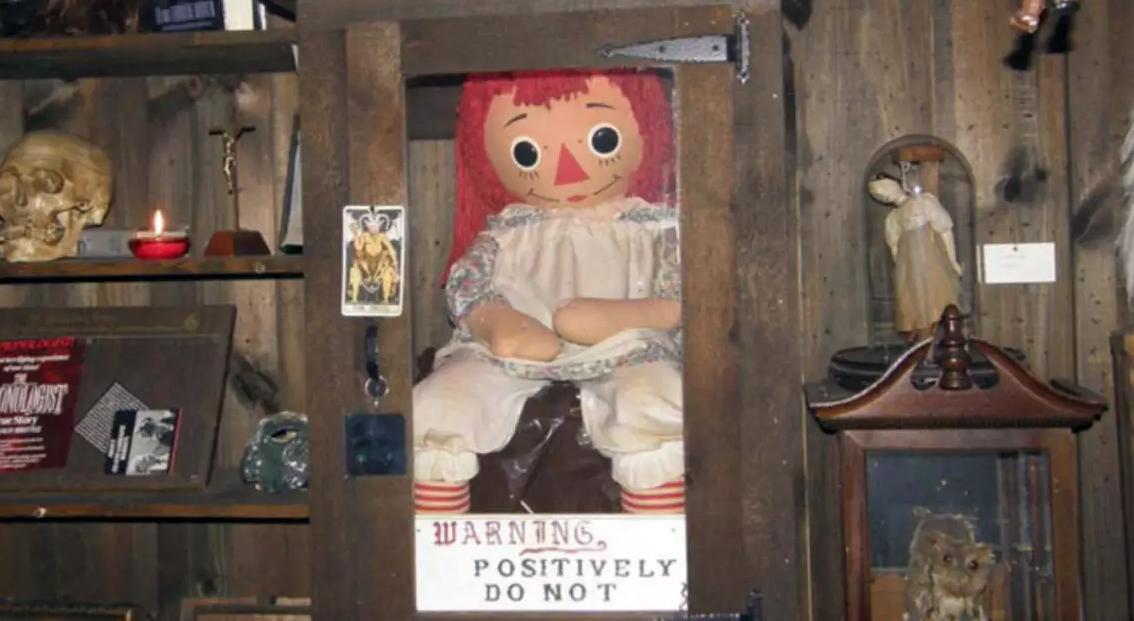
The Annabelle doll, sealed in a glass case at the Warren Occult Museum, Monroe, Connecticut
Annabelle — Investigated by Named Researchers, Never Independently Verified
A Raggedy Ann doll given as a gift in Connecticut, 1970, became the subject of investigation by paranormal researchers Ed and Lorraine Warren, who concluded it was a conduit for a malevolent entity rather than the spirit of a deceased child. They sealed it in a glass case at what became the Warren Occult Museum, where it remains.
The most widely repeated incident — a visitor killed in a motorcycle crash after taunting the sealed case — comes from Warren estate records and secondhand retellings, not independent police or coroner documentation. It should be treated as firsthand museum lore rather than verified fact.
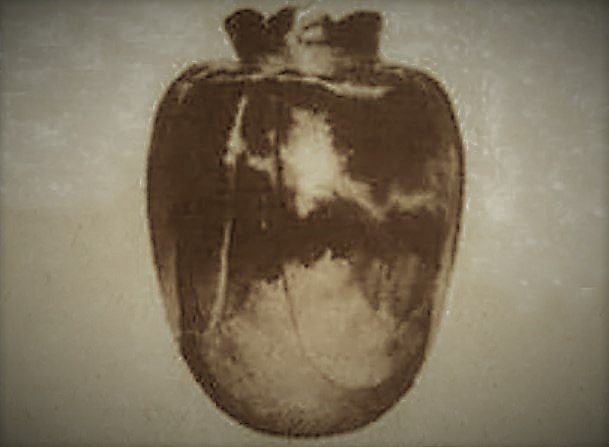
The Basano Vase, carved silver, 15th century northern Italy — current whereabouts unknown
The Basano Vase — The Least Independently Verifiable Case in This List
According to Italian press reports from the 1990s, a silver vase made for a 15th-century wedding was blamed for the bride’s death on her wedding night and reportedly killed four modern owners — a pharmacist, a surgeon, an archaeologist, and, by some tellings, others — each within months of acquiring it. The reporting traces to a small number of Italian outlets, and no museum, coroner, or academic body has independently confirmed the case history.
This is the entry on the list with the thinnest sourcing, and it belongs in the folklore tier: a story with a consistent shape, repeated in print, but not corroborated outside its original press coverage.
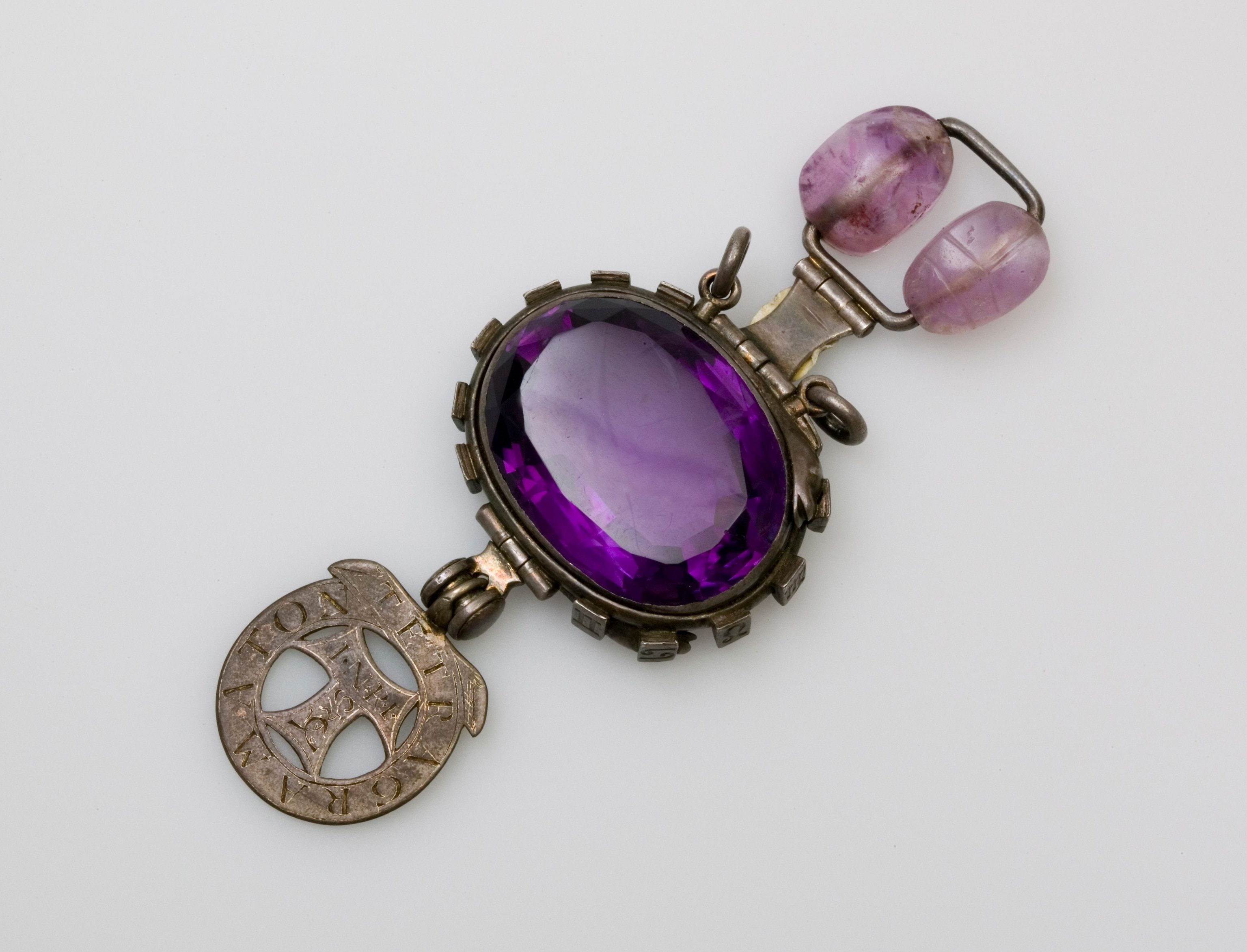
The Delhi Purple Sapphire (actually an amethyst), Natural History Museum, London
The Delhi Purple Sapphire — The Owner’s Own Letter Is the Evidence
Colonel W. Ferris looted the stone — actually an amethyst — from a temple in Cawnpore during the 1857 Indian Rebellion. It later passed to Edward Heron-Allen, a noted Edwardian polymath, who reported repeated financial losses while he owned it and eventually bequeathed it to the Natural History Museum, London in 1904 with a letter calling it “trebly accursed.” That letter survives in the museum’s archive — this is the rare case where the primary evidence is the owner’s own written account, not secondhand reporting.
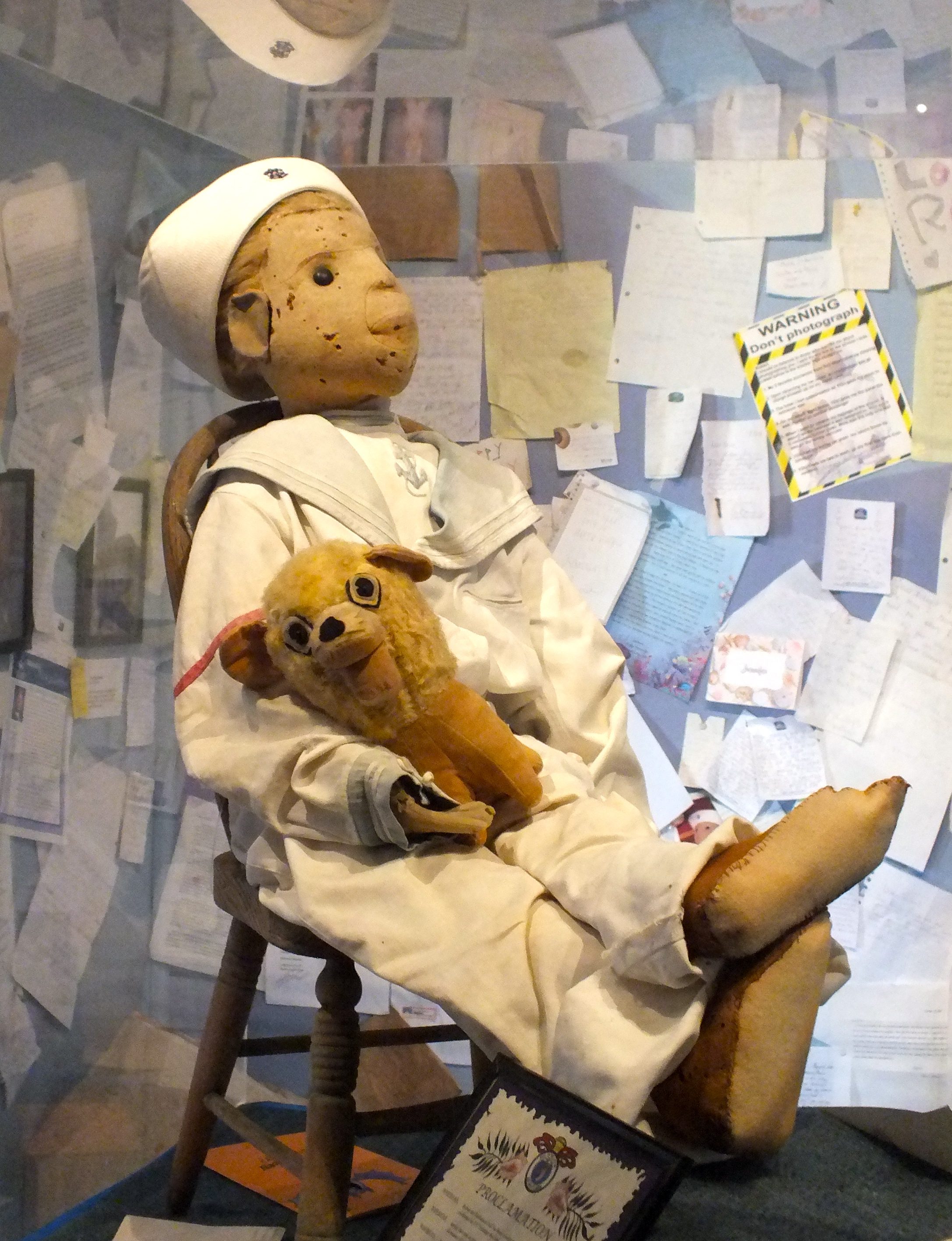
Robert the Doll on display at the Fort East Martello Museum, Key West, Florida
Robert the Doll — Still Generating Reports 120 Years Later
Given to Robert Eugene Otto in 1904, the doll became the subject of neighborhood reports of independent movement and disturbances in the Otto household. It now sits at the Fort East Martello Museum, where visitors who photograph it without asking permission report camera malfunctions and bad luck at a rate the museum describes informally through its wall of written apology letters. These reports are anecdotal and self-selected — visitors who experience nothing don’t tend to write in.
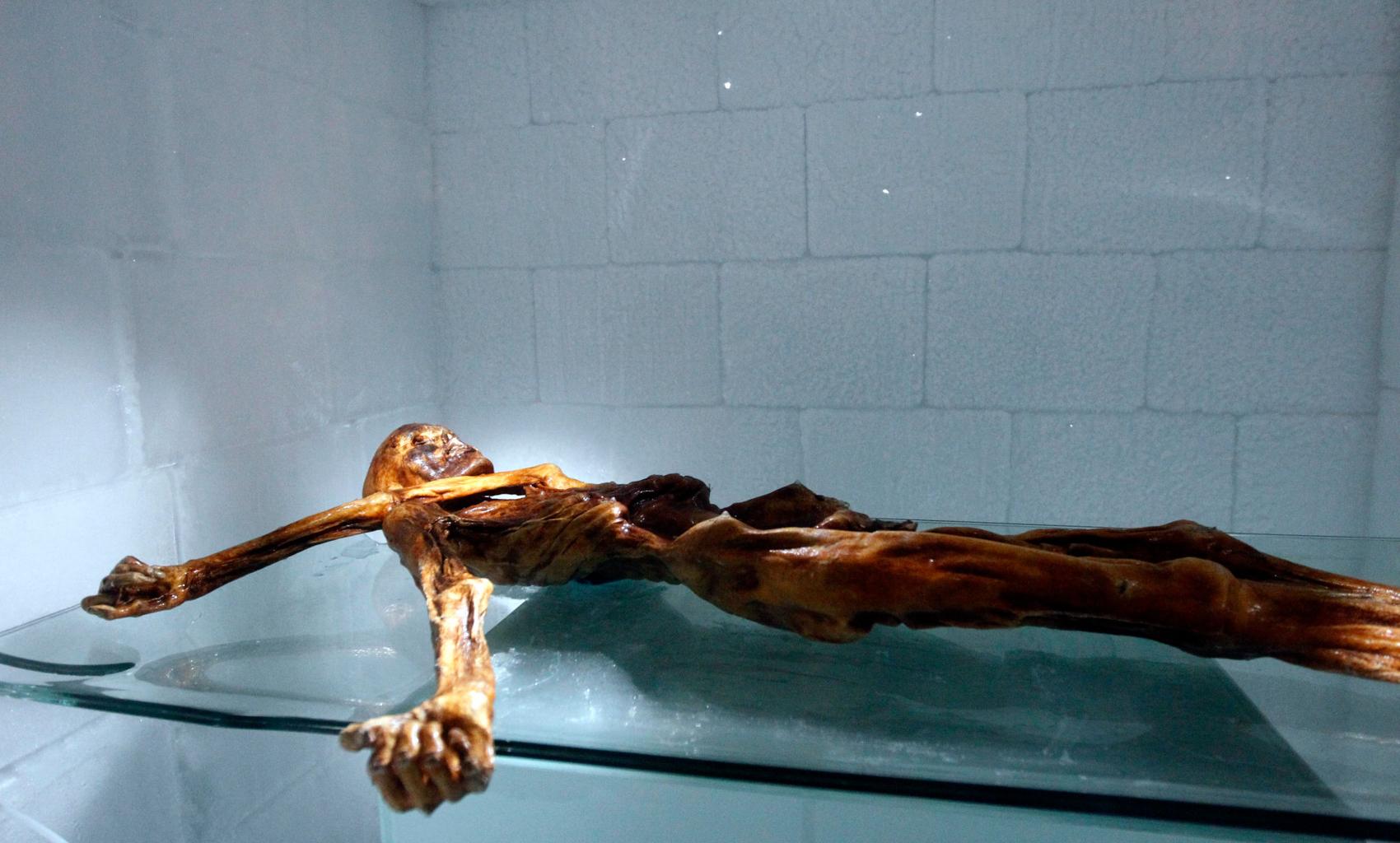
Ötzi the Iceman, 5,300-year-old mummy, South Tyrol Museum of Archaeology, Bolzano
Ötzi — Seven Deaths Among Researchers, No Common Cause Identified
Discovered in 1991 emerging from a melting Alpine glacier, Ötzi is the oldest natural human mummy found in Europe, killed by an arrow to the shoulder around 3300 BCE. Seven people connected to his discovery and study have since died in sudden or violent circumstances over roughly two decades — reported in Der Spiegel in 2005 — including hiker Helmut Simon, who died in a blizzard in 2004, and the mountain rescue chief who searched for him, who suffered a fatal heart attack days after Simon’s funeral.
No common cause links the deaths, and the sample size (seven, among the many hundreds who have worked on or near the case since 1991) is small enough that a statistical claim of significance, unlike the Tutankhamun case, has not been formally made.
Section II — Newly Examined Cases
Curse Tablets, Debunked Relics & Cultural Sensitivities
Several objects below are not folklore at all — they are archaeological finds whose “curse” is the literal inscription on the object, written and buried by real people in antiquity as a documented ritual practice. We treat these differently from haunted-doll stories, because the evidence standard is completely different: the artifact itself is the primary source.

The “Unlucky Mummy” mummy-board, British Museum, London (EA22542)
The Unlucky Mummy — Not a Mummy, and Not on the Titanic
Housed at the British Museum as object EA22542, this is actually the inner coffin lid, or mummy-board, of an unnamed priestess of Amen-Ra — there is no mummy inside it. Late Victorian society gossip attached a chain of misfortunes to it: broken bones, ruined fortunes, and, most famously, a persistent claim that it was aboard the Titanic in 1912.
The British Museum’s own records confirm the board never left the museum and was never booked on the ship — this specific legend is formally debunked. The earlier stories of misfortune among 19th-century owners are folklore-tier and untraceable to primary sources, though the object’s genuine age and museum provenance are well documented.

The Black Orlov Diamond Necklace (67.50-carat black diamond)
The Black Orlov — A 20th-Century Curse Story, Never Corroborated
The Black Orlov is a 67.50-carat black diamond, said in popular retellings to have been pried from a statue of Brahma in India and to have caused the suicides of three successive owners in the early 20th century, including two Russian princesses. No court record, obituary, or contemporary news report naming these individuals has been independently located; the story appears to originate with 20th-century diamond dealers promoting the stone, a common practice in the gem trade.
What is documented: the stone was cut into three smaller pieces and reset before its 2006 sale at Christie’s, reportedly intended in part to “break” its reputation — a marketing decision, not evidence of an actual curse.

The Koh-i-Noor diamond, 105.6 carats as currently cut
The Koh-i-Noor — A Curse Legend That Tracks Real Conquest
The Koh-i-Noor’s ownership history is unusually well documented for a gemstone, passing through Mughal, Persian, Afghan, and Sikh rulers before its 1849 annexation by the British East India Company following the Anglo-Sikh Wars. A Hindu text associated with the stone is said to warn that only God or a woman may wear it without misfortune — a claim that long postdates the stone’s actual origin and cannot be traced to a primary ancient source.
What can be documented is that nearly every male ruler associated with the stone lost his throne, was imprisoned, blinded, or killed in the course of ordinary dynastic and colonial conflict — a pattern that reflects the historical reality of contested succession and empire wealth redistribution, rather than a supernatural mechanism. The stone is now set in the British Crown Jewels and displayed only when worn by a queen consort, incidentally matching the folklore.

Roman curse tablets (defixiones) on display, Roman Baths Museum, Bath, England
The Bath Curse Tablets — Genuine Curses, Not Folklore
Excavated from the sacred spring at Bath, England, more than 130 lead defixiones — curse tablets — have been recovered, catalogued, and translated by archaeologists. Most were written by ordinary Romano-British petitioners asking the goddess Sulis Minerva to punish thieves who had stolen bathhouse clothing or coins, often listing suspects by name and demanding the goddess “not permit them health” until the stolen items were returned.
These are not legendary objects retroactively labeled cursed — they are literal ritual curse texts, a well-studied category of Roman religious practice showing how hidden infrastructure of belief operated, held today at the Roman Baths Museum and analysed in academic epigraphy.

Roman lead defixio (curse tablet), inscribed and rolled for burial
The Defixio — A Formal Genre of Ancient Curse, Studied by Classicists
Beyond Bath, thousands of similar lead tablets — defixiones — have been recovered across the Roman world, from Britain to North Africa. Scholars including John Gager and Fritz Graf have published academic catalogues of these texts, which typically name a target, invoke a chthonic or underworld deity, and were folded, pierced with a nail, and buried in graves, wells, or under thresholds to increase their supposed potency.
Their historical significance is not in dispute — they are primary evidence for Roman folk religion, private grievance, and even ancient Latin dialect variation. Whether any tablet produced its intended supernatural effect is, naturally, outside what the historical record can verify.

The Pella curse tablet, 4th century BCE, Archaeological Museum of Pella, Greece
The Pella Curse Tablet — A Love Curse and a Linguistic Landmark
Discovered in the ancient Macedonian capital of Pella — birthplace of Alexander the Great — this small lead scroll, dated to roughly 375–350 BCE, is inscribed with a curse by a woman seeking to prevent a man from marrying another woman, invoking underworld spirits to bind his intentions to her instead. It is written in a Doric Greek dialect, making it significant evidence in the long-running academic debate over what language Macedonians actually spoke.
Unlike many later Roman examples, the Pella tablet is remarkable for being written by, or on behalf of, a named woman in a personal, non-official context — a rare window into private ritual practice in the Classical Greek world. It is held at the Archaeological Museum of Pella.

The Hexham Heads, carved stone pair discovered in a Northumberland garden, 1971
The Hexham Heads — A Case Study in How “Cursed Object” Stories Form
In 1971, a boy digging in his family’s garden in Hexham, Northumberland, unearthed two small carved stone heads. Both families who subsequently kept them reported disturbing phenomena, including claimed werewolf-like sightings — accounts that remain entirely anecdotal. Archaeologist Dr. Anne Ross examined the heads and initially believed them Iron Age Celtic in style, but later investigation raised doubts about their age, and the original heads were reportedly lost or replaced, complicating any scientific dating.
This case is included deliberately as a caution: the “curse” narrative here formed quickly around an artifact whose authenticity itself was never conclusively established, illustrating how folklore can attach to an object faster than archaeology can evaluate it.
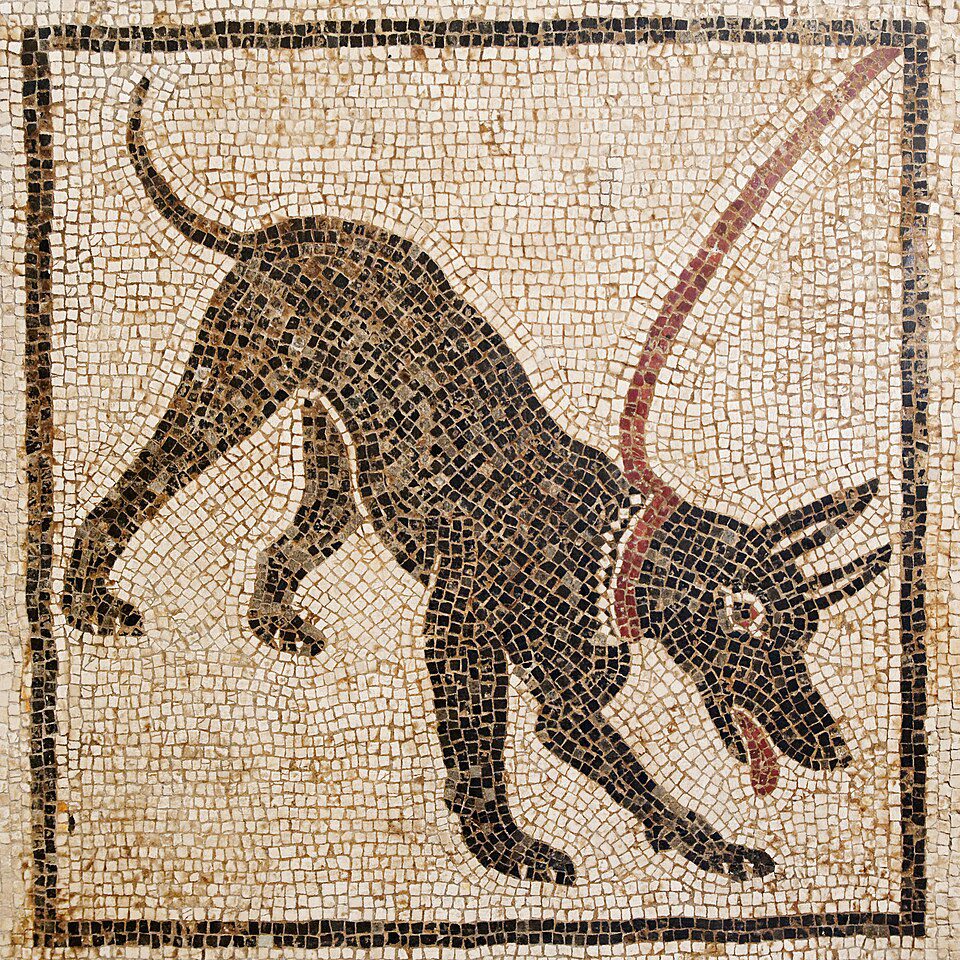
“Cave Canem” (Beware of Dog) mosaic, House of the Tragic Poet, Pompeii
The Pompeii Curse: Objects Removed from Pompeii
To be transparent: the famous Cave Canem (“Beware of Dog”) mosaic pictured here is not cursed—it is simply used as a representative image of the archaeological site. The reported “Pompeii curse” actually concerns the thousands of souvenirs, rocks, and artifacts removed by tourists over the decades. The Archaeological Park of Pompeii regularly receives packages containing stolen fragments mailed back by tourists who claim the illicit souvenirs brought them years of financial ruin, illness, or bad luck.
While the mosaic remains safely intact in its original context, the folklore attaches exclusively to the pieces taken from the site. There is no historical curse inscribed on these stones; the phenomenon is entirely driven by the guilt or superstition of modern handlers.

A quartz crystal skull of the type once claimed to be ancient Maya, British Museum collection
The Crystal Skull — The Clearest Debunking on This List
Adventurer F.A. Mitchell-Hedges claimed his daughter Anna discovered a life-sized quartz skull at the Maya site of Lubaantun, Belize, in the 1920s, and mystical claims of the skull’s power circulated for decades. Forensic examination by the Smithsonian Institution and the British Museum, using microscopic and tool-mark analysis, found evidence of rotary lapidary wheel cutting — technology unavailable to the ancient Maya — indicating the skull was almost certainly manufactured in the 19th or 20th century, likely in Europe.
This is the most clearly resolved case in this article. Where most entries end with acknowledged uncertainty, the crystal skull proves how new discoveries rewrite human history by putting false myths to rest: it is not ancient, not Maya, and not evidence of anything supernatural.
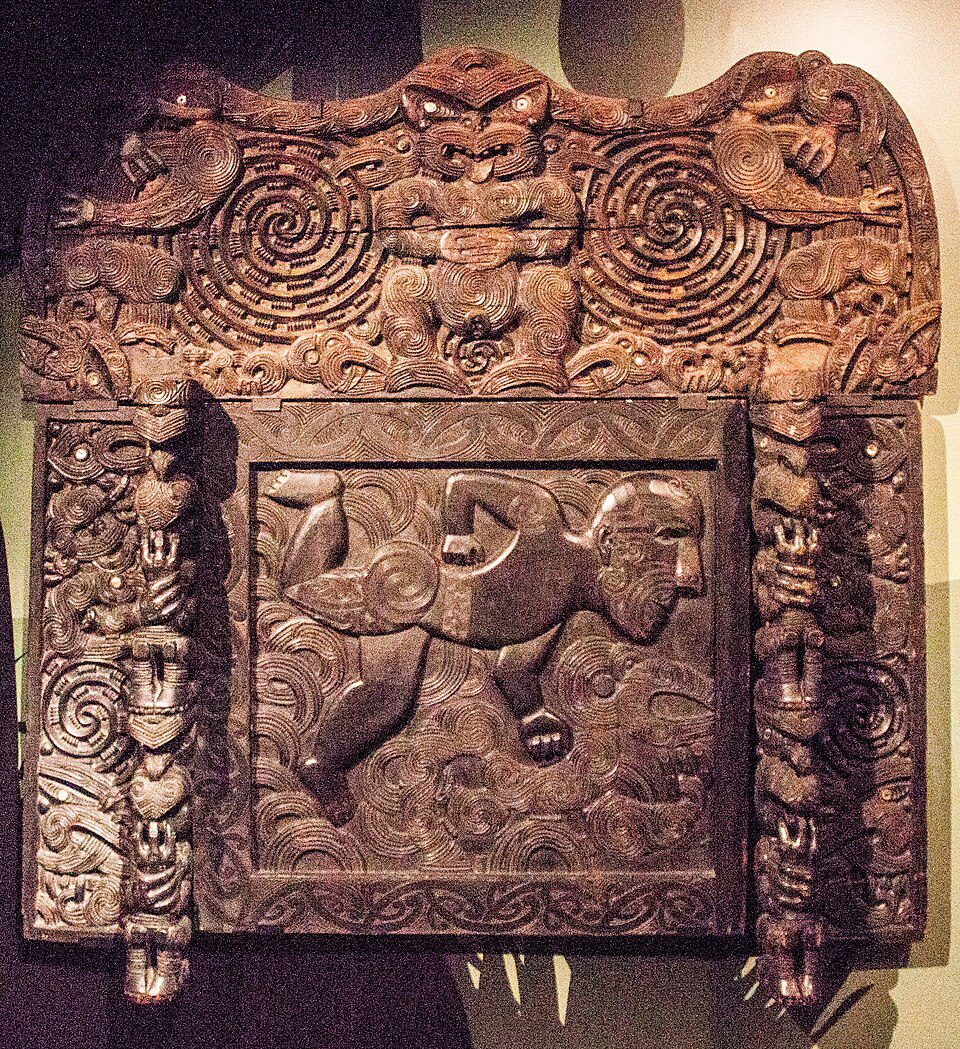
Carved wooden Māori panel, Rotorua Museum, New Zealand
A Note on Tapu — Why This Entry Doesn’t Fit the “Cursed Object” Framework
Carved Māori objects such as war masks and ceremonial panels are frequently described in Western popular writing as “cursed,” and we want to be direct about why we’re not using that framing here. In Māori tradition, many carved and ceremonial items are considered taonga — treasures carrying tapu, a concept of sacredness and restriction that governs how an object should be handled, by whom, and under what protocols. Tapu is not equivalent to a Western horror-genre curse; it is a living cultural and spiritual framework, not a plot device.
What is genuinely documented is a broader, serious issue: many such taonga were removed from Aotearoa New Zealand during the colonial period and now sit in overseas museum collections, a subject of ongoing repatriation efforts and negotiation between iwi (tribal groups) and institutions worldwide. We include this object to acknowledge that history honestly, rather than to recast a living culture’s sacred protocols as spooky folklore.
| # | Object | Origin | Era | Evidence Tier | Current Location |
|---|---|---|---|---|---|
| 01 | The Hope Diamond | India | 1660s | Press/Archival | Smithsonian, D.C. |
| 02 | Tutankhamun’s Tomb | Egypt | 1323 BCE | Academic (BMJ 2002) | Valley of the Kings |
| 03 | The Crying Boy Paintings | Italy/UK | 1950s | Press Record | Various |
| 04 | The Dybbuk Box | Poland | c.1900s | Firsthand Account | Las Vegas (sealed) |
| 05 | The Little Bastard | USA | 1955 | Press Record | Unknown — vanished 1960 |
| 06 | The Annabelle Doll | USA | 1970s | Firsthand Account | Warren Museum, CT |
| 07 | The Basano Vase | Italy | 15th C. | Unverified Press | Unknown — vanished c.1990s |
| 08 | The Delhi Purple Sapphire | India | 1857 | Archival (owner’s letter) | Natural History Museum, London |
| 09 | Robert the Doll | USA | 1904 | Ongoing Anecdote | Fort East Martello, Key West |
| 10 | Ötzi the Iceman | Alps | 3300 BCE | Press Record | South Tyrol Museum, Bolzano |
| 11 | The Unlucky Mummy | Egypt | c.950 BCE | Debunked Legend | British Museum, London |
| 12 | Black Orlov Diamond | India (claimed) | Early 20th C. | Unverified Legend | Private collection |
| 13 | Koh-i-Noor Diamond | South Asia | 14th C.–present | Documented History | Tower of London |
| 14 | Roman Bath Curse Tablets | England | 2nd–4th C. CE | Academic/Museum | Roman Baths Museum, Bath |
| 15 | Roman Defixio Tablet | Roman Empire | 1st–5th C. CE | Academic Record | Various museums |
| 16 | The Pella Curse Tablet | Macedonia | c.375–350 BCE | Academic Record | Archaeological Museum of Pella |
| 17 | The Hexham Heads | England | Found 1971 | Contested Account | Whereabouts unclear |
| 18 | Pompeii “Cave Canem” Mosaic | Italy | Buried 79 CE | Archaeological Record | National Archaeological Museum, Naples |
| 19 | Mitchell-Hedges Crystal Skull | Belize (claimed) | Claimed 1920s | Debunked (Forensic) | Private collection |
| 20 | The Māori War Mask | New Zealand | Various | Cultural/Museum Record | Various institutions |
Are Cursed Objects Real? It Depends Which One You Mean
Grouping the Hope Diamond, a Roman curse tablet, and a debunked crystal skull under one heading only works if you’re honest about how differently each is evidenced. The Roman tablets are not folklore — they are primary written sources, and their existence as a genuine ritual practice is beyond dispute, even though nobody can verify whether the curses worked. Tutankhamun’s tomb has an actual peer-reviewed statistical study behind it. The crystal skull has a forensic answer that closes the case entirely. The Basano Vase, by contrast, rests on a handful of Italian press reports that no later researcher has corroborated.
Once an object is labeled cursed, confirmation bias takes over: every misfortune near it gets catalogued, every ordinary outcome is forgotten. The Hope Diamond has been handled by hundreds of people who lived unremarkable lives; those people don’t make the historical record. That doesn’t mean every case here is empty. When a peer-reviewed journal concludes a cluster of deaths is statistically unlikely to be chance, or when six unconnected owners report an identical nightmare, that is worth taking seriously as a historical puzzle — just not as proof of anything supernatural.
Common Questions
FAQs About Cursed Objects in History
Answers to the most-asked questions, with evidence tiers noted where relevant.
Are cursed objects in history real, or just coincidence?
It depends on the object. Tutankhamun’s tomb has a 2002 British Medical Journal study concluding the death cluster was statistically unlikely to be chance. The Roman curse tablets at Bath and Pella are genuine archaeological artifacts — the “curse” is the literal, documented inscription, though its supernatural effect was never demonstrated. Objects like the Dybbuk Box, Annabelle, and the Basano Vase rest on firsthand or press accounts that were never formally verified. The Mitchell-Hedges Crystal Skull has been forensically shown to be modern, not ancient. Treat each case on its own evidence.
What is the most historically documented cursed object?
The Roman curse tablets recovered from the sacred spring at Bath, England, are the most rigorously documented — over 130 genuine 2nd-to-4th-century lead inscriptions, excavated and catalogued by archaeologists and held at the Roman Baths Museum. Tutankhamun’s tomb is the strongest case with an actual peer-reviewed statistical study attached.
Which “cursed” objects have been scientifically debunked?
The Mitchell-Hedges Crystal Skull is the clearest case: forensic tool-mark analysis by the Smithsonian and British Museum found evidence of modern rotary-wheel cutting, indicating 19th-or-20th-century manufacture rather than an ancient Maya origin. The “Unlucky Mummy” board’s Titanic legend has also been formally denied by the British Museum, which confirms the object never left its collection.
What are Roman curse tablets (defixiones)?
Defixiones are thin lead sheets inscribed with formal appeals asking a deity to punish a named person, most often a thief or rival. Thousands survive from across the Roman world, including the Bath and Pella tablets discussed in this article. Unlike folklore curses attached to objects like haunted dolls, these are primary written historical sources documenting a real ritual practice, studied by classicists such as John Gager and Fritz Graf.
Why did the Crying Boy paintings survive house fires?
Investigators found a partial scientific explanation: the mass-produced prints were coated in fire-resistant varnish, and the backing caused them to fall face-down when the hook burned, protecting the surface. A Yorkshire fire brigade test in 1985 confirmed abnormal fire resistance, though this doesn’t fully explain the consistency across prints from different manufacturers.
Is it respectful to describe Māori or other indigenous cultural objects as “cursed”?
Generally, no — and this article avoids doing so. Concepts like Māori tapu describe a living cultural and spiritual framework governing how sacred objects (taonga) should be handled, not a horror-genre curse. We include the Māori war mask to acknowledge genuine, documented issues around colonial-era removal and ongoing repatriation efforts, rather than to recast a living culture’s protocols as spooky folklore.
Research Sources & Further Reading
- British Medical Journal — Tutankhamun Study (2002): Dr. Mark Nelson’s statistical analysis of deaths linked to the KV62 excavation.
- Smithsonian Institution — Hope Diamond Archives: Ownership history and documented accounts of misfortune associated with the stone.
- Natural History Museum London — Delhi Sapphire: Edward Heron-Allen’s original 1904 letter, archived alongside provenance from 1857.
- Roman Baths Museum — Curse Tablet Collection: Official custodian of the Bath defixiones, with translated inscriptions on public display.
- South Tyrol Museum of Archaeology — Ötzi Research: Documentation of Ötzi’s discovery, forensic analysis, and published accounts of the case.
- British Museum — Crystal Skull & Egyptian Collections: Forensic findings on the crystal skull and records relating to the “Unlucky Mummy” board.